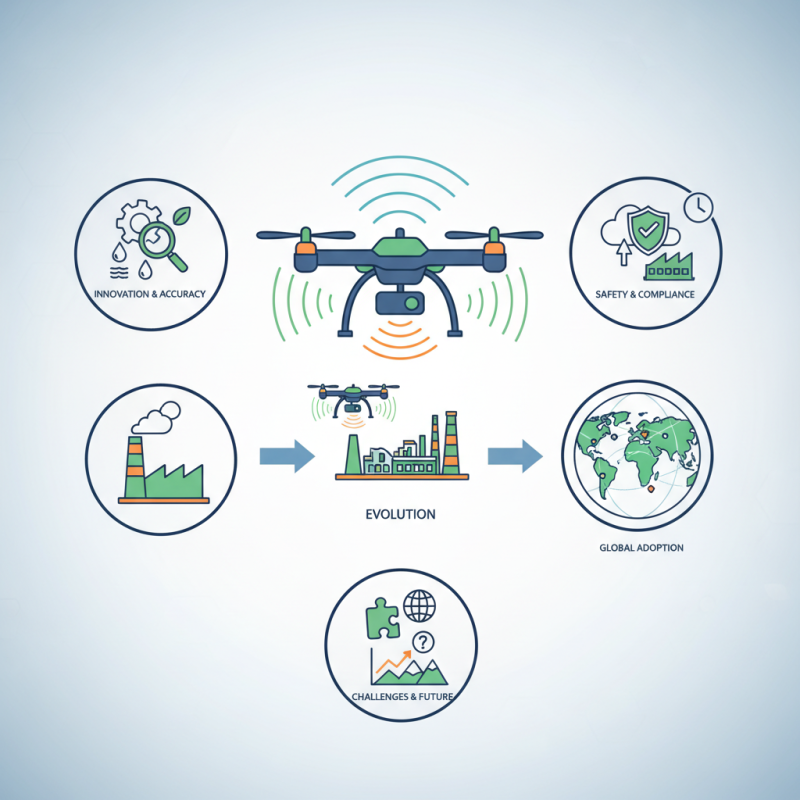
The drone gas monitoring industry is rapidly evolving, driven by the need for accurate and efficient environmental assessments. Experts like Dr. Emily Sanders, a prominent figure in remote sensing technology, emphasize the importance of innovation. She once stated, "Drone gas monitoring revolutionizes how we detect leaks and measure air quality." This highlights a crucial shift in environmental oversight.
As businesses and governments seek sustainable solutions, drone technology stands out. It offers unmatched capabilities for monitoring hazardous gas emissions, ensuring compliance with regulations. Drones provide real-time data, improving decision-making processes. The efficiency of these systems is critical for industries like oil and gas, where safety is paramount.
However, challenges remain. The industry must address concerns about reliability and data interpretation. Emerging technologies continue to enhance drone capabilities, yet uncertainties linger about their effectiveness in diverse environments. Refining these systems will determine their adoption and utility in global markets. Ultimately, drone gas monitoring promises to reshape environmental management, but it requires continuous improvement and vigilance.
In 2026, drone technology for gas monitoring continues to evolve rapidly. These systems are critical in various industries, notably in environmental monitoring and industrial safety. Reports indicate that the global drone gas monitoring market is expected to grow from $500 million in 2021 to over $1.2 billion by 2026. This reflects a significant compound annual growth rate (CAGR) of 18% during this period.
The effectiveness of drone gas monitoring systems is rooted in their ability to cover large areas quickly. Equipped with advanced sensors, these drones can detect multiple gases, such as methane, carbon dioxide, and volatile organic compounds. This level of precision improves response times to potential leaks or hazardous conditions. However, reliance on technology can sometimes lead to oversight. Operators may assume drones will catch all issues without proper ground confirmation.
Moreover, as regulatory frameworks around gas emissions tighten, the demand for compliant monitoring solutions increases. While drone systems provide innovative options for tracking atmospheric changes, their deployment requires skilled operators. Training remains a challenge, and inconsistency in data processing can affect the reliability of findings. Ensuring quality in both hardware and operator education is vital for the success of drone gas monitoring in the future.
When considering drone gas monitoring systems, several key features emerge as critical. First and foremost, the sensor type is paramount. Different gases require specific detection technologies, such as infrared sensors for methane or electrochemical cells for toxic gases. A recent industry report indicated that advanced sensors can improve detection efficiency by up to 30%. This reliability ensures accurate monitoring in various environments.
Another important aspect is flight endurance. Drone systems designed for extensive gas monitoring should ideally last at least 30 minutes in the air. This duration supports thorough inspections over large areas. Additionally, real-time data transmission capabilities are crucial. Many systems now integrate GPS and cloud technology for immediate data access, which enhances decision-making processes.
Tip: Ensure that the drone's payload capacity can handle required sensors. A heavier payload might reduce flight time.
Another consideration is user-friendliness. Operators need intuitive interfaces for ease of use, particularly in high-stress situations. The complexity of certain systems can lead to mistakes. Therefore, training and support from manufacturing sources are vital for safety and efficiency. Ultimately, while many advancements are available, buyers should be cautious to evaluate technologies that align with their specific monitoring needs.
The demand for drone gas monitoring systems is rapidly growing. These systems are essential for industries like oil and gas, environmental monitoring, and public safety. According to industry reports, the global market for drone gas sensors is projected to reach $2.5 billion by 2026. This growth is driven by the increasing need for real-time data collection and safety inspections.
Top manufacturers of these systems focus on innovation and accuracy. They aim to provide solutions that offer real-time gas detection capabilities. Some sensors can detect a range of gases, including methane and carbon dioxide, which are critical for environmental safety. However, the technology is still evolving, with challenges in sensor calibration and data interpretation. Issues like battery life and payload capacity can affect overall performance.
Some brands are pioneering lightweight designs and advanced algorithms to improve functionality. Yet, reliability remains a concern, especially in harsh environments. Future developments will likely address these issues, aiming for greater precision and durability. Continuous assessments are vital for enhancing the performance and reliability of drone gas monitoring systems. This will ultimately shape the industry's direction moving forward.
| Model | Detection Range (ppm) | Battery Life (hours) | Payload Capacity (kg) | Operating Temperature (°C) |
|---|---|---|---|---|
| Model A | 0 - 1000 | 15 | 5 | -10 to 50 |
| Model B | 0 - 500 | 12 | 3 | -20 to 40 |
| Model C | 0 - 2000 | 10 | 6 | -5 to 55 |
| Model D | 0 - 1500 | 20 | 4 | -15 to 45 |
The demand for drone gas monitoring systems is rapidly growing. Industries are increasingly aware of the importance of environmental safety. Drones are now seen as effective tools for real-time data collection and analysis. They provide immediate insights into air quality and gas emissions. Accuracy in monitoring can significantly reduce risks to human health and the environment.
The global market is shifting towards smarter technologies. Buyers seek systems that integrate advanced sensing capabilities with analytics. These systems offer users timely alerts and detailed reports. However, not every solution is perfect. Some drones face challenges in sensor reliability and battery life. Furthermore, data processing standards vary widely across regions.
Investment in training and support is crucial. Users need to understand how to maximize these tools effectively. Regular updates and maintenance can enhance efficiency. Stakeholders must also consider regulatory compliance. As the market matures, educational resources will become more vital. Gaps in knowledge could lead to missed opportunities for improvement and safety.
The field of drone gas monitoring is poised for significant innovation by 2026. Advanced sensors are being integrated into drones, making them invaluable tools in environmental monitoring. A recent market analysis projects a growth rate of over 20% annually for drone gas detection technologies. This growth reflects the increasing demand for real-time data on air quality and gas emissions.
New developments include enhanced autonomous navigation systems and improved battery life, allowing drones to operate in harsher environments. These advancements enhance data collection efficiency and accuracy. The integration of machine learning algorithms will further elevate gas detection capabilities, enabling real-time analysis and predictive insights. Some experts suggest that with the rise of IoT, drones could soon work in tandem with ground sensors for more holistic monitoring solutions.
**Tip:** Regularly update your drone's software. This ensures you benefit from the latest sensor calibrations and data interpretation improvements.
While innovations proceed rapidly, certain challenges remain. Data privacy concerns arise as drone operations increase in populated areas. There is also the potential for over-reliance on technology, which might overlook human expertise in interpreting results.
**Tip:** Always combine drone data with on-ground assessments for comprehensive analysis.
: Different gases need specific sensors. For example, infrared sensors are best for methane detection.
Ideally, drones should stay airborne for at least 30 minutes for thorough inspections over large areas.
Real-time data allows immediate access to information, aiding in timely decision-making and response to gas emissions.
The drone's payload capacity is crucial. A heavier payload can significantly reduce flight time during gas monitoring.
Intuitive interfaces help operators avoid mistakes, especially in high-pressure situations. Complexity can lead to errors.
Investment in training and support is vital to maximize drone tools and ensure safe, efficient operations.
There's increasing awareness of environmental safety, leading to a growing demand for effective data collection and analysis tools.
Some drones struggle with sensor reliability and battery life, which can affect monitoring effectiveness.
Regular updates can enhance efficiency and improve performance, making monitoring more reliable over time.
Lack of knowledge about drone technologies may lead to missed opportunities for safety and efficiency enhancement.
The article "2026 Top Drone Gas Monitoring Systems for Global Buyers" provides a comprehensive overview of the advancements in Drone Gas Monitoring technology anticipated for 2026. It highlights key features that consumers should consider when evaluating these systems, such as accuracy, real-time data transmission, and sensor capabilities. The piece also examines the current trends in the global market, noting a significant increase in demand for environmentally friendly and efficient monitoring solutions.
As industries increasingly adopt Drone Gas Monitoring systems, the article discusses potential innovations on the horizon, including enhanced AI integration and improved battery life for longer operational periods. These developments promise to revolutionize how businesses monitor air quality and hazardous gas emissions, ultimately contributing to safer work environments and more sustainable practices.

Airppb