Selecting an Anti Terror Gas Telemeter demands more than comparing prices and alarm ranges. These instruments support early hazard recognition in airports, laboratories, transport hubs, and industrial facilities. A small display, delayed warning, or weak battery can create serious confusion during a stressful inspection. The right device should match the environment, users, gases of concern, and required response procedures.
Professor James Reason, a leading safety and human-factors expert, wrote, “We cannot change the human condition, but we can change the conditions under which humans work.” His principle fits telemeter selection closely. A dependable Anti Terror Gas Telemeter should reduce avoidable mistakes through clear alarms, readable measurements, rugged construction, and straightforward training. Consider loudness in a crowded station, screen visibility under bright sunlight, glove-friendly controls, and data reliability after repeated field use.
Seven practical checks can guide the decision. Review sensor capability, detection limits, calibration needs, battery endurance, environmental protection, alarm configuration, and supplier support. Look for documented testing, traceable calibration, and service records. Ask difficult questions. Can operators replace filters without tools? Does the alarm remain clear near machinery? Will the unit perform in cold rain or dusty corridors? Some specifications look impressive on paper but feel less convincing in real hands. That is where honest evaluation matters. No instrument removes uncertainty. It only helps trained people recognize changing conditions earlier and respond with greater confidence. Safety teams should validate the choice through controlled exercises, maintenance reviews, and feedback from actual users.
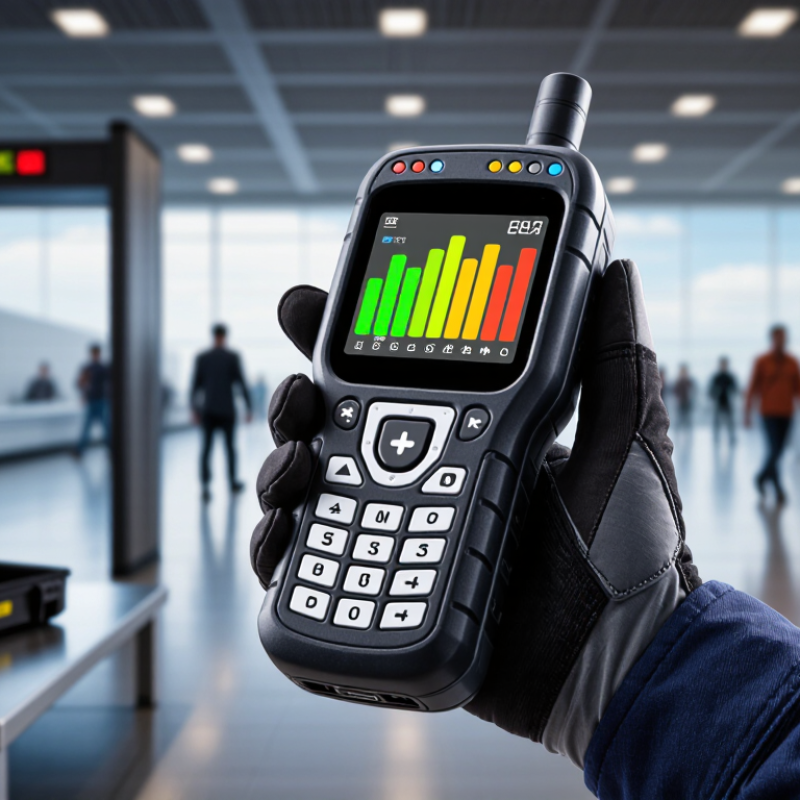
Choosing an anti-terror gas telemeter begins with defining its operational role. Is it intended for rapid screening, continuous site monitoring, or emergency team support? Each purpose requires different detection limits, response times, and sampling methods. Start with the threat profile. Identify the gases of concern, expected concentration ranges, and likely environments, such as transit areas, public buildings, or enclosed rooms.
A reliable telemeter should detect relevant hazards without creating unnecessary alarms. Sensor selection matters because humidity, temperature, dust, and cleaning chemicals can affect readings. Field testing often reveals weaknesses that laboratory tests miss. Check calibration procedures, sensor replacement intervals, alarm settings, and battery performance. Clear visual and audible alerts are important when responders wear protective equipment or work in poor visibility. Data logging and secure wireless transmission can also support incident review and professional reporting.
Do not judge the instrument by sensitivity alone. A very sensitive sensor may produce frequent false alarms, delaying sensible decisions. No device is perfect. Experienced teams compare telemeter readings with approved confirmation methods before making major operational choices. The unit should also remain usable with gloves, have a readable display, and withstand transport, vibration, and changing weather. I would leave room for reassessment, because threat patterns, building layouts, and response procedures can change over time.
| No. | Selection Dimension | Recommended Evaluation Point | Typical Technical Data | Why It Matters | Priority |
|---|---|---|---|---|---|
| 1 | Define the Detection Mission | Identify whether the instrument is intended for personal protection, perimeter monitoring, indoor screening, emergency response, or fixed-site surveillance. | Portable units commonly support personal or team use; fixed systems are suited to continuous area monitoring and integration with alarms or control rooms. | A clear role prevents choosing a portable detector for a fixed installation or a basic monitor for a complex multi-zone security task. | Critical |
| 2 | Match the Gas List to the Threat Assessment | Select sensors according to the gases that may be present, rather than relying only on the term “anti-terror.” | Common sensor categories include oxygen, combustible gases, toxic gases such as carbon monoxide, hydrogen sulfide, chlorine, ammonia, and volatile organic compounds. Specialized chemical-agent detection requires dedicated technology. | No single sensor detects every hazardous substance. The selected configuration must reflect the site risk assessment and expected concentration range. | Critical |
| 3 | Check Sensor Performance | Compare detection limits, measuring range, response time, selectivity, and cross-sensitivity for each target gas. | Typical toxic-gas instruments may measure in the parts-per-million range; oxygen sensors commonly cover approximately 0–25% by volume; combustible-gas sensors are often specified against a percentage of the lower explosive limit. Response times vary by sensor and sampling method. | Sensitivity alone is not enough. False alarms, delayed response, or sensor poisoning can reduce the value of a monitoring system. | High |
| 4 | Evaluate Telemetry and Alarm Communication | Review how readings, alarms, location data, and device status are transmitted to operators or a central platform. | Possible communication methods include cellular, Wi-Fi, private radio, wired Ethernet, or short-range wireless links. Important functions include alarm acknowledgment, data logging, loss-of-connection alerts, and time-stamped records. | A detector is more useful when supervisors can receive actionable alerts remotely and verify whether the device is operating correctly. | High |
| 5 | Verify Environmental and Hazardous-Area Suitability | Confirm the enclosure rating, operating temperature, humidity tolerance, impact resistance, and hazardous-location approval where applicable. | Look for an appropriate ingress-protection rating, ruggedized construction, operating limits suitable for the site, and recognized hazardous-area certification when flammable atmospheres may occur. | Environmental mismatch can cause measurement errors, premature failure, or an unacceptable ignition risk. | High |
| 6 | Assess Power, Sampling, and Operating Time | Compare battery runtime, charging arrangements, pump requirements, sample-line length, warm-up time, and field-replacement options. | Battery operation may range from a working shift to several days depending on sensors, telemetry activity, display use, and pump operation. Pumped systems can sample remote or difficult-to-access areas but consume more power. | The system must remain active throughout patrols, evacuations, inspections, or extended incidents without creating avoidable interruptions. | Medium |
| 7 | Plan Calibration, Compliance, and Lifecycle Support | Review calibration procedures, bump-test requirements, sensor replacement intervals, audit records, software updates, training, and service availability. | Gas detectors generally require routine functional checks and calibration at intervals defined by the manufacturer, workplace procedures, sensor condition, and applicable regulations. Alarm thresholds should be configured using recognized occupational or process-safety limits. | Reliable data depends on a maintained sensor. Documentation and training are essential for defensible emergency decisions and regulatory inspections. | High |
Note: Technical ranges and compliance requirements vary by gas, sensor technology, site conditions, and jurisdiction. Final selection should be based on a documented risk assessment and the applicable safety standards.
Define its role clearly: rapid screening, continuous monitoring, or emergency team support. Each role needs different detection limits, response times, and sampling methods.
Identify likely hazards, concentration ranges, and locations before selecting sensors. Consider enclosed rooms, corridors, transit areas, vents, and low points.
The measurable range should match real monitoring conditions. A narrow range may miss dangerous changes. Excessive sensitivity may create frequent false alarms.
Review cross-sensitivity to smoke, humidity, fuel vapors, dust, and cleaning chemicals. Compare readings with approved confirmation methods before major decisions. No sensor is perfect.
Check the T90 response time under realistic airflow conditions. Test near doors, vents, corridors, and low areas where gas may collect. Faster is not always better.
Choose clear visual, audible, and vibration alerts. The display should remain readable in poor lighting. Controls should work with gloves.
Perform a bump test before each shift and full calibration at the required interval. Record calibration dates, test gases, failed checks, and sensor replacements. Keep spare filters and batteries labeled.
Training should cover alarm meanings, sampling limits, protective equipment, evacuation routes, and incident reporting. Test the device in bright light, loud noise, and limited visibility. Real conditions expose weaknesses.
Review purchase, calibration gases, service visits, software, batteries, downtime, and replacement sensors. A cheaper unit may cost more after repeated repairs. The manual may be optimistic.
Laboratory results cannot show every weakness caused by transport, vibration, weather, or battery changes. Repeat tests after extended operation. Document uncertainty instead of ignoring it.
Choosing the right Anti Terror Gas Telemeter requires a clear understanding of its intended role, operating environment, and detection objectives. Start by identifying the gases and hazards that must be monitored, then compare detection range, sensitivity, accuracy, and response speed. A suitable device should provide dependable readings while minimizing false alarms and supporting quick decision-making in changing field conditions.
Next, evaluate telemetry and connectivity features, including real-time data transmission, remote monitoring, alert notifications, and compatibility with existing safety procedures. Durability is also essential, especially for outdoor or demanding deployments, so consider protection against dust, moisture, impact, and temperature changes. Battery life, charging options, portability, and installation flexibility can strongly affect daily usability. Finally, review compliance documentation, calibration requirements, maintenance support, user training, and total ownership costs. A well-balanced Anti Terror Gas Telemeter should deliver reliable detection, practical deployment, straightforward operation, and long-term value without compromising safety.

 Airppb