Choosing Chemical Gas Monitoring equipment is not simply a matter of selecting the lowest detection range. The right system must match the gas, workplace, risk profile, and operating environment. A sensor placed near a solvent tank may face vapors, heat, vibration, and changing airflow. Those details can affect readings.
Process safety expert Trevor Kletz warned, “What you don’t know can hurt you.” His observation remains relevant when invisible hazards can develop before workers notice unusual odors. A reliable monitoring strategy should identify target gases, expected concentrations, oxygen conditions, response time, and required alarm levels. It should also consider sensor technology, portability, calibration needs, data logging, and maintenance access. No device is perfect. That deserves honest attention.
This guide explains how to compare fixed, portable, and wireless Chemical Gas Monitoring equipment. It also examines electrochemical, infrared, catalytic, and photoionization technologies. Each option has strengths and limitations. For example, an electrochemical sensor may suit toxic gases, while infrared detection can support certain combustible gas applications. However, humidity, cross-sensitivity, dust, and temperature can still influence performance.
Practical experience matters. Ask whether technicians can test the instrument easily, replace sensors safely, and review historical alarms. Check the manufacturer’s technical documentation and independent certification. Consider recognized workplace safety guidance, such as recommendations from OSHA and relevant IEC standards. A thoughtful selection process reduces false alarms, missed events, and avoidable maintenance problems. It may not remove every uncertainty. It can make that uncertainty visible, manageable, and easier to review.
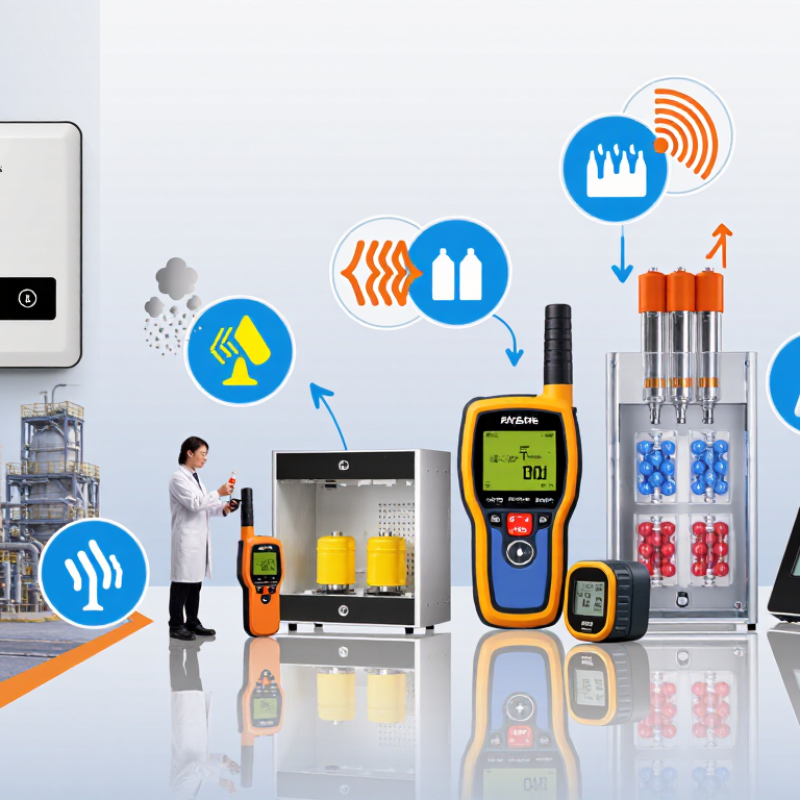
Define the chemical hazards before selecting monitoring equipment. Review safety data sheets, process inventories, task observations, and historical incident records. Separate acute toxicity from chronic exposure, oxygen deficiency, flammability, and corrosive effects. A transfer hose may release gas near a worker’s face, while heavier vapors can collect near floor drains. These locations require different sensing and sampling decisions.
The WHO and ILO estimated 450,000 deaths in 2016 from occupational exposure to particulate matter, gases, and fumes. That figure supports a cautious monitoring strategy, but it does not replace site-specific evidence. Compare workplace limits with NIOSH exposure guidance, including IDLH values, and document the chosen alarm thresholds. Define the objective clearly: personal exposure assessment, continuous leak detection, confined-space entry, or emergency response. Each purpose changes sensor placement, response time, calibration frequency, and data recording requirements.
Keep it practical.
Walk the route.
Observe valve access, ventilation changes, and likely worker breathing zones. Fixed monitors may protect a room, but they cannot describe short maintenance tasks. Portable instruments may reveal those peaks, yet users can position them poorly. This is an uncomfortable weakness. Recheck assumptions with direct-reading measurements, laboratory analysis, and worker feedback. The monitoring plan should identify what will be measured, where, for how long, and what action follows every alarm.
| Chemical Hazard | Typical Sources | Primary Risk | Monitoring Objective | Suitable Detection Technology | Illustrative Measurement Range | Important Alarm or Reference Point | Sampling Considerations |
|---|---|---|---|---|---|---|---|
| Oxygen deficiency or enrichment | Confined spaces, nitrogen purging, inert-gas systems, oxygen storage, combustion processes | Asphyxiation at low oxygen levels; increased fire risk in oxygen-enriched atmospheres | Verify safe entry conditions and detect displacement or enrichment of oxygen | Electrochemical oxygen sensor | 0–25% volume O₂ | OSHA defines oxygen deficiency as below 19.5% and oxygen enrichment as above 23.5% by volume | Test at multiple heights when gases may stratify; verify sensor response before confined-space entry |
| Carbon monoxide (CO) | Internal-combustion engines, boilers, furnaces, welding, incomplete combustion | Toxic inhalation; reduces the blood’s oxygen-carrying capacity | Protect workers from cumulative exposure and identify combustion problems | Electrochemical CO sensor | 0–500 ppm | OSHA permissible exposure limit: 50 ppm as an 8-hour time-weighted average | Place monitors near occupied areas and potential exhaust sources; use time-weighted alarms where required |
| Hydrogen sulfide (H₂S) | Sewage treatment, oil and gas operations, wastewater, manure pits, petroleum processing | Highly toxic inhalation; olfactory fatigue can make odor an unreliable warning | Provide personal warning, confined-space protection, and area release detection | Electrochemical H₂S sensor; pumped sampling for remote or confined locations | 0–100 ppm | NIOSH recommends a 10 ppm ceiling over 10 minutes; the IDLH concentration is 100 ppm | Sample low areas and enclosed spaces; consider sensor poisoning and frequent bump testing |
| Ammonia (NH₃) | Refrigeration systems, fertilizer production, chemical processing, agriculture | Respiratory and eye irritation; corrosive effects at high concentrations | Detect leaks, protect operators, and initiate ventilation or emergency response | Electrochemical or semiconductor NH₃ sensor; open-path systems for large areas | 0–100 ppm for personal monitoring; higher ranges for leak detection | OSHA permissible exposure limit: 50 ppm as an 8-hour time-weighted average | Ammonia is lighter than air under many conditions, but temperature, moisture, and ventilation affect dispersion |
| Chlorine (Cl₂) | Water disinfection, swimming pools, chemical manufacturing, bleaching operations | Toxic and strongly irritating to the respiratory system, eyes, and skin | Detect toxic releases at storage, dosing, and process areas | Electrochemical chlorine sensor; fixed detector for continuous area monitoring | 0–10 ppm or 0–20 ppm | NIOSH ceiling limit: 0.5 ppm over 15 minutes; IDLH concentration: 10 ppm | Locate detectors near probable release points and air intakes; use corrosion-resistant sampling components |
| Volatile organic compounds (VOCs) | Solvent use, fuel handling, coatings, printing, cleaning, chemical storage | Acute irritation or central nervous system effects; some VOCs are carcinogenic | Screen for leaks, assess workplace exposure, and identify areas requiring laboratory analysis | Photoionization detector for screening; infrared or compound-specific sensors where applicable | Typically 0–2,000 ppm is used for portable screening, depending on the compound | PID readings are usually reported as isobutylene-equivalent values and require a compound response factor | Humidity, lamp energy, calibration gas, and compound response factors can affect readings |
| Benzene | Petroleum refining, fuel storage, coke production, laboratories, solvent-containing products | Chronic exposure can damage bone marrow and increase cancer risk | Measure low-level exposure and support personal exposure assessment | Compound-specific detector, benzene-selective tube, or laboratory sorbent-tube sampling | Low-ppb to low-ppm range, depending on the method | OSHA permissible exposure limit: 1 ppm as an 8-hour time-weighted average; local requirements may be more protective | General VOC instruments may not distinguish benzene from other VOCs; confirm results with a validated method |
| Carbon dioxide (CO₂) | Fermentation, beverage production, dry ice, confined spaces, indoor occupancy, inert-gas processes | Asphyxiation risk at high concentrations; can accumulate in poorly ventilated low areas | Verify ventilation performance and detect process or storage releases | Non-dispersive infrared sensor | 0–5% or 0–10% volume CO₂ | NIOSH IDLH concentration: 40,000 ppm, or 4% by volume | CO₂ is denser than air and may collect in pits, tanks, and low-lying areas; install or sample accordingly |
| Combustible gases and vapors | Natural gas, hydrogen, methane, propane, fuel vapor, process leaks | Fire or explosion when concentration reaches the flammable range and an ignition source is present | Detect leaks before concentrations approach the lower explosive limit | Catalytic bead or infrared combustible-gas sensor; open-path infrared for long-distance coverage | 0–100% LEL | Alarm settings are commonly selected below 100% LEL; the exact value must follow the site risk assessment and applicable code | Sensor response varies by gas; catalytic sensors require oxygen, while infrared sensors may not detect every gas |
Note: Measurement ranges and alarm values are examples for equipment selection and hazard assessment. Final setpoints, sensor locations, calibration intervals, and compliance limits must be confirmed against the applicable regulations, safety data sheets, process conditions, and site-specific risk assessment.
Calibration confirms whether readings match known reference gases. It supports safer alarm decisions. Accuracy is not optional.
Set alarms below harmful exposure levels, considering escape time and site procedures. Alarm patterns must be clear. Loud is not always enough.
Records should include gas levels, alarm times, sensor status, and operator identity. Correct timestamps matter. Forgotten downloads weaken the record.
Yes. Logs may show repeated events near valves, doorways, or charging points. Patterns become visible. But the story may still be incomplete.
Check performance in dust, humidity, vibration, and temperature changes. A loading area may be noisy. Weak alarms can disappear there.
Include filter checks, battery replacement, sensor-life tracking, and cleaning after contamination. Inspect the inlet too. A blocked sensor can defeat good calibration.
Request test certificates, calibration procedures, detection ranges, and measurement records. Ask how alarms are tested during inspections. Marketing language is not evidence.
Count calibration gases, replacement sensors, batteries, software, training, service visits, and disposal. Estimate five-year operating costs. The cheaper option may not stay cheap.
Choosing the right Chemical Gas Monitoring equipment begins with a clear understanding of the hazards present and the monitoring objectives. Identify the gases that may be released, their potential concentrations, exposure risks, and whether the system is intended for personal safety, process control, leak detection, or emergency response. Then select sensor types and detection technologies that provide suitable sensitivity, response time, selectivity, and measurement range for each gas.
The equipment should also match the installation environment, including temperature, humidity, dust, ventilation, hazardous-area requirements, and available power or communication systems. Before making a final decision, evaluate calibration procedures, alarm settings, data logging, remote notifications, maintenance intervals, and ease of sensor replacement. Finally, verify that the equipment meets applicable safety and performance requirements, offers dependable operation, and provides reasonable total ownership costs, including installation, calibration, training, maintenance, and future upgrades.

 Airppb