Drone Gas Monitoring can help buyers assess gas risks at industrial sites, remote facilities, and other hard-to-reach locations. A drone’s usefulness depends on more than its flight range. Sensor type, detection limits, payload capacity, and battery life all affect what a team can measure in the field. A compact aircraft may reach a narrow pipe corridor, but its sensor may not suit every target gas. The details matter.
For global buyers, comparing equipment means looking closely at calibration procedures, data quality, weather limits, maintenance support, and operator training. Wind can disperse a leak before a reading is taken. A sensor can also produce confusing results if it is poorly maintained or used outside its operating range. No checklist removes every blind spot. Buyers should ask suppliers for clear specifications, demonstration data, and practical guidance on interpreting readings, rather than relying on broad marketing claims.
The seven tips in this guide focus on decisions that influence day-to-day performance: matching sensors to inspection needs, checking payload and flight endurance, reviewing calibration and reporting features, and planning for local service and training. They also highlight questions about environmental conditions, data handling, and safe operating procedures. Requirements and site practices vary, so buyers should confirm relevant expectations with qualified professionals in each market. A polished demo is useful, but it cannot show every field constraint. Careful comparison takes time—and sometimes the right choice is less obvious than expected.
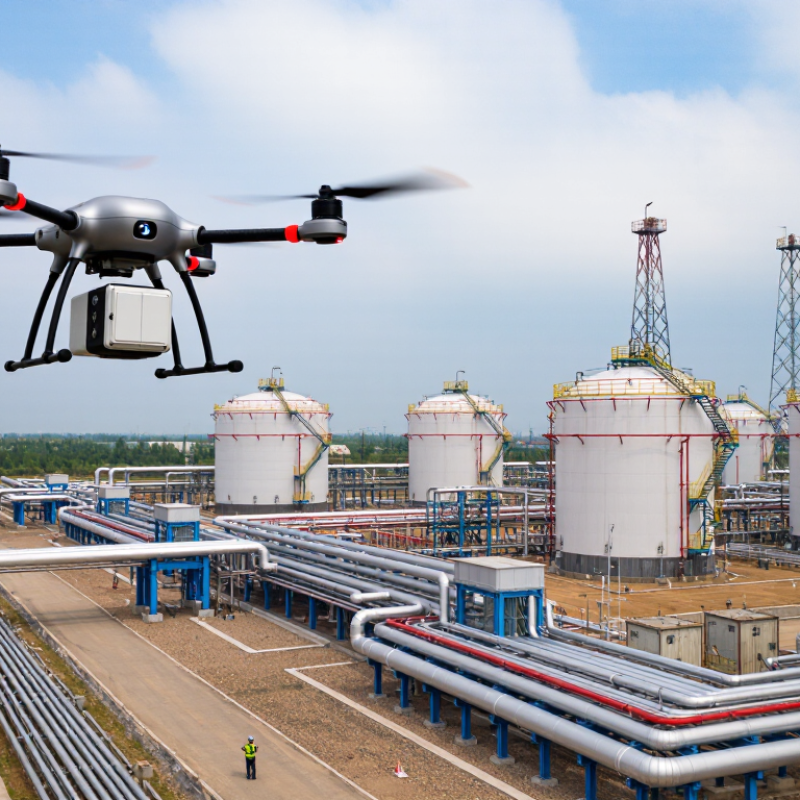
Define the Gas Monitoring Needs and Target Hazards
Start with the decision the flight must support: detect a leak, map a plume, or check an area before workers enter. These tasks need different sensors, sampling intervals, and reporting thresholds. List likely gases from process records, safety data sheets, and incident history. Then check whether the payload measures concentration in ppm, percentage of the lower explosive limit, or both. Units matter.
Set hazard priorities before choosing equipment. The NIOSH Pocket Guide lists hydrogen sulfide’s IDLH concentration as 100 ppm, while chlorine’s is 10 ppm. These are immediately dangerous exposure benchmarks, not routine alarm settings. Use site-specific risk assessments and applicable occupational guidance to establish action levels. A drone may cross a plume quickly. Sensor response time, detection range, wind, and cross-sensitivity can affect readings. Test those limits under realistic conditions. Small details count.
Record the target gas, expected concentration range, sampling height, and required response time in the flight plan. For example, a refinery inspection may need both combustible-gas readings and a toxic-gas channel; one sensor rarely covers every hazard. Check calibration records and confirm whether the sensor’s operating temperature and humidity match the site. I would also document uncertainty, even when it makes the report less tidy. NIOSH reference values help frame the hazard, but they cannot replace local procedures or instrument validation.
Sensor choice should match the gas, range, and flight environment. Electrochemical sensors suit many toxic gases and usually offer low detection limits. Infrared sensors perform well for hydrocarbons and provide stable readings. Photoionization sensors detect many volatile compounds, but humidity can affect results. Metal-oxide sensors are compact, yet they may show stronger cross-sensitivity. Small does not mean precise.
Compare accuracy and detection limit separately. Accuracy describes closeness to a known concentration. The detection limit shows the smallest concentration the sensor can reliably notice. A sensor may detect tiny changes but still measure them with wide uncertainty. Ask for test data at low, medium, and high ranges. Request response-time figures too. Fast readings matter during moving flights.
Check calibration records and use traceable reference gases. Perform a field response check before each survey. Record temperature, humidity, altitude, battery level, and sensor age. These details can explain a strange reading later. Mounting position also matters; propeller airflow can dilute a sample. Protect the inlet from dust, but do not restrict airflow. Compare repeated passes over the same point. Honest testing sometimes reveals unstable results. That is useful evidence, not failure. Some specifications look impressive on paper, while real outdoor performance remains uncertain. Ask for independent reports, maintenance intervals, and clear uncertainty statements before purchase.
Tip 1: Measure range under real conditions, not brochure claims. Urban steelwork, hills, and heavy rain can weaken control links. Keep a tested reserve distance. A longer range is useful only when the signal remains stable and the operator can react quickly. Line-of-sight performance should be verified at the actual facility.
Tip 2: Treat flight time as a variable. Payload weight, wind, cold batteries, and repeated hovering reduce endurance. I recommend testing with the gas sensor, pump, and sampling tube installed. A practical test includes takeoff, a ten-minute inspection route, return, and a safety reserve. It may reveal an uncomfortable truth: the advertised endurance is often optimistic. Shorter missions can produce better data quality.
Tip 3: Check environmental durability before purchase. Dust, salt spray, vibration, and temperature shifts can damage seals and distort sensor readings. An IP rating helps, but it does not replace field trials. Inspect battery behavior in cold mornings and humid conditions. Real sites are messier.
The IEA’s Global Methane Tracker 2024 estimated about 120 million tonnes of methane emissions from fossil fuel operations in 2023. Reliable drone monitoring therefore depends on stable flight and accurate sensing, not speed alone. UNEP’s Global Methane Assessment reports that methane has over 80 times the warming impact of carbon dioxide over twenty years. Buyers should request documented calibration, weather limits, range tests, and maintenance intervals. A pilot test over pipes, tanks, and uneven ground is worth more than polished specifications.
7 Drone Gas Monitoring Tips for Global Buyers
Verify Safety Standards, Data Security, and Local Regulations
A reliable gas-monitoring drone starts with documented safety compliance. Check whether the aircraft and sensors meet local aviation, electrical, and hazardous-area requirements. Ask for current test reports, not marketing claims. Verify sensor calibration records, detection ranges, response times, and operating limits. Confirm the enclosure rating for dust, rain, and chemical exposure. Small details matter.
Test the system before purchase. Compare readings with a certified handheld instrument at known gas concentrations. Review how alarms appear when wind changes or a sensor becomes saturated. Confirm that operators receive practical training and maintenance instructions. Store flight logs securely. Require encryption during transmission and storage, role-based access, strong passwords, and clear data-retention rules. Avoid systems that quietly upload sensitive site data without consent.
Regulations vary by country and sometimes by city. Check drone registration, pilot licensing, airspace restrictions, radio permissions, privacy duties, and worker-safety rules. Some sites require additional approval near airports, energy facilities, or protected areas. Ask where data is hosted and who can access it. A local legal review is worth the cost. Still, compliance documents can become outdated. Build a renewal check into every project. A perfect checklist may miss changing conditions.
7 Drone Gas Monitoring Tips for Global Buyers
A capable supplier should explain sensor limits, detection ranges, and flight-time effects clearly. Ask for factory test records and traceable calibration certificates. Request a live demonstration using a controlled, known gas concentration. Watch how quickly readings stabilize. Short answers are a warning.
Calibration support often matters more than the purchase price. Check whether local technicians can service sensors and replace filters. Confirm calibration intervals, turnaround times, and training options. Ask how the supplier handles failed field checks. Keep spare sensors available. They reduce downtime. Also review software updates, data export formats, and compatibility with your existing reporting system.
Total ownership costs include batteries, chargers, transport cases, calibration gases, maintenance, training, and annual verification. Compare these costs over three years, not only the invoice. A cheaper drone may need frequent sensor replacement. That difference can become substantial. I have seen buyers overlook battery aging in hot climates. That mistake is easy to repeat. Evaluate warranty coverage, support languages, import procedures, and regional response times. No supplier is perfect, so record every assumption and test it before signing.
| # | Evaluation Area | What to Check | Buyer’s Verification | Cost or Risk to Include |
|---|---|---|---|---|
| 1 | Gas and measurement fit | Confirm the target gas, expected concentration range, measurement units, detection limit, and whether readings are intended for screening or compliance use. | Request the sensor’s gas-specific performance data and check that the stated range and units match the monitoring plan. | A sensor unsuitable for the target gas or concentration range may produce unusable readings and require replacement. |
| 2 | Payload and flight integration | Check payload mass, mounting, power draw, communications, data logging, and whether the sensor’s sampling method suits the flight plan. | Obtain a complete payload specification and confirm compatibility with the aircraft, controller, and planned flight duration. | Include integration work, reduced flight time, additional batteries, and any required flight testing. |
| 3 | Environmental performance | Compare the operating temperature, humidity, ingress protection, vibration tolerance, and response time with actual site conditions. | Ask for test conditions behind published specifications and identify any operating limits that could affect field readings. | Exposure outside specified conditions can affect readings, increase downtime, or shorten sensor life. |
| 4 | Calibration and traceability | Check calibration procedure, recommended interval, compatible reference gases, adjustment process, and availability of calibration records. | Request sample certificates and written guidance. Set the calibration schedule according to the sensor instructions, use conditions, and quality requirements. | Allow for reference gas, regulators, shipping, service labor, downtime, and locally accepted traceability requirements. |
| 5 | Supplier support and service | Assess technical documentation, training, warranty terms, repair options, spare-part availability, and support coverage in operating regions. | Ask for response-time commitments, service locations, escalation contacts, and a clear process for fault diagnosis and returns. | Include cross-border shipping, import charges, service turnaround, and the cost of keeping a spare sensor or payload. |
| 6 | Data quality and workflow | Verify timestamps, units, export formats, GPS association, alarm behavior, and how readings are stored and reviewed. | Request a sample data file and test that it can be imported into the intended mapping, reporting, or asset-management workflow. | Budget for software, data integration, training, storage, and review time; confirm that the system meets applicable data-security requirements. |
| 7 | Total cost of ownership | Compare the full expected cost over the planned service period, not just the purchase price. | Use one consistent cost model for each option: purchase + integration + training + calibration + consumables + software + maintenance + shipping and duties + downtime − resale value. | State the comparison period, currency, tax assumptions, and estimated usage so supplier quotes can be compared on the same basis. |
Match the sensor to the target gas, detection range, and flight conditions. Electrochemical sensors suit many toxic gases; infrared sensors work well for hydrocarbons. Humidity may affect photoionization readings, while metal-oxide sensors can have cross-sensitivity.
Accuracy describes how close a reading is to a known concentration. The detection limit is the smallest concentration the sensor can reliably detect. A low detection limit does not guarantee precise measurements.
Record calibration details, temperature, humidity, altitude, battery level, and sensor age. Check the sensor before each survey, and compare repeated passes over the same point. Propeller airflow can dilute a sample.
Compare its readings with a certified handheld instrument using known gas concentrations. Review test data across low, medium, and high ranges, plus response times. Outdoor results may still differ from impressive specifications.
Check local aviation, electrical, hazardous-area, privacy, and worker-safety requirements. Confirm drone registration, pilot licensing, airspace restrictions, and any site-specific approvals. Rules can change, so review them for each project.
Look for encryption during transmission and storage, role-based access, strong passwords, and clear retention rules. Ask where data is hosted and who can access it. Avoid unexplained uploads.
Request traceable calibration certificates, factory test records, clear sensor limits, and a controlled live demonstration. Ask about local servicing, calibration intervals, replacement filters, training, and failed field checks. Short answers are a warning.
Include batteries, chargers, transport cases, calibration gases, maintenance, training, and annual verification. Check warranty terms, software updates, import procedures, and regional support. Battery aging in hot climates is easy to overlook.
Keep spare sensors available and confirm local repair options before deployment. Check replacement times and maintenance instructions. This helps, though it cannot prevent every delay.
No. Request current test reports, independent evidence, and clear uncertainty statements. Documents can become outdated, and outdoor performance may remain uncertain. Record your assumptions and test them before signing.
Choosing the right Drone Gas Monitoring solution begins with a clear understanding of the gases and hazards that need to be detected, along with the required measurement range and response time. Compare sensor technologies for accuracy, sensitivity, and detection limits, and consider whether they can perform reliably under expected field conditions. A drone’s range and flight time should match the inspection area, while its durability should suit relevant weather, temperature, and operating environments.
Before purchasing, confirm that the equipment meets applicable safety requirements, protects monitoring data, and can be used in accordance with local regulations. Assess suppliers not only by equipment specifications but also by their calibration services, technical support, and replacement options. Finally, compare the total cost of ownership, including training, maintenance, calibration, and consumables. A well-matched system can support dependable inspections and help buyers make informed decisions over the equipment’s working life.

Airppb