China’s industrial boiler sector is under growing pressure to measure combustion performance, emissions, and energy losses with greater confidence. A reliable Boiler Tail Gas Analyzer supports oxygen, carbon monoxide, carbon dioxide, sulfur dioxide, and nitrogen oxide monitoring at the stack.
The International Energy Agency’s World Energy Outlook 2024 continues to highlight China’s major role in global energy consumption and emissions. Its analysis also reinforces the need for cleaner industrial operations and stronger efficiency controls. China’s Ministry of Ecology and Environment reported continued improvements in national air quality during 2023, but industrial combustion remains a practical monitoring challenge. Small leaks, wet sampling lines, or unstable flue gas temperatures can distort readings.
Accuracy matters.
Leading Chinese suppliers commonly offer extractive, in-situ, portable, and continuous emission monitoring solutions. However, product brochures rarely provide enough evidence for a fair ranking. Buyers should examine calibration records, sensor lifespan, response time, enclosure protection, spare-parts availability, and after-sales support. ISO 12039 provides an important reference for oxygen, carbon dioxide, and carbon monoxide measurement. EPA instrumental methods, including Method 3A, also provide useful technical benchmarks for gas analysis practices.
This guide compares China’s prominent Boiler Tail Gas Analyzer suppliers through engineering capability, product configuration, certification evidence, and field service experience. It also considers performance in dusty, humid environments, where sampling probes may collect deposits and filters may clog quickly. A supplier may appear technically strong yet perform poorly without local maintenance coverage. That point deserves more scrutiny.
Readers should treat rankings as a practical shortlist, not a permanent verdict. Site conditions, boiler fuel, regulatory requirements, and verification procedures can change the final choice.
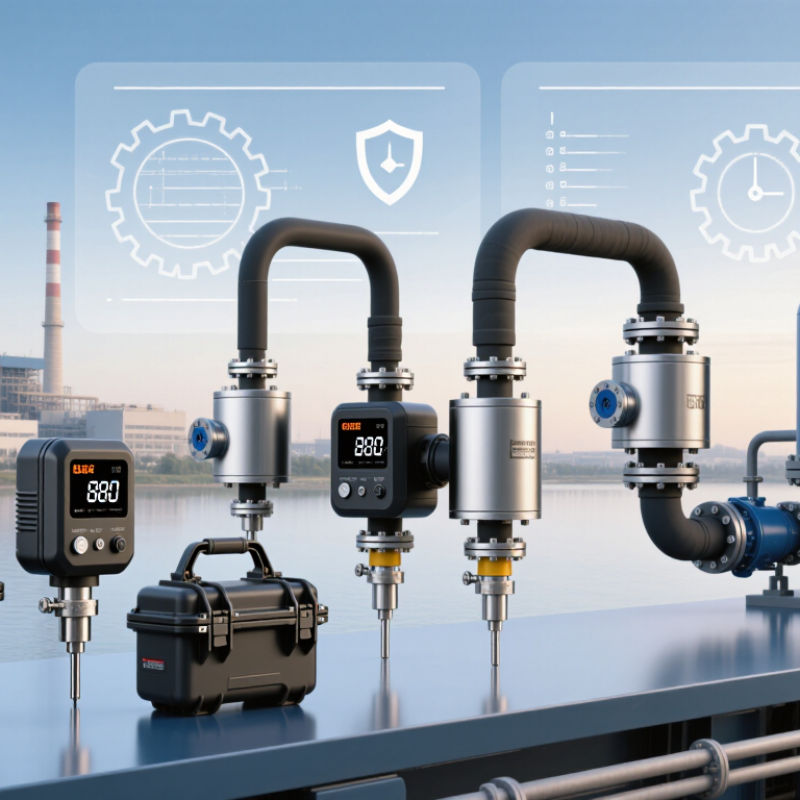
A boiler tail gas analyzer turns hot, wet exhaust into actionable operating data.
Its oxygen channel shows whether combustion has enough air. Too little O₂ can raise CO and soot. Too much air wastes heat through the stack. In practice, operators should read O₂ with furnace load, not alone.
Small details matter.
CO indicates incomplete combustion and may change quickly during burner adjustment. CO₂ helps assess combustion performance, although it is normally calculated or measured with infrared technology. NOₓ monitoring covers nitrogen oxides formed by flame temperature and excess oxygen. SO₂ reflects sulfur in the fuel and supports emission-control checks. Each channel has different interference risks. Water vapor can distort infrared readings, while dust and acidic condensate can damage probes. Heated sampling lines, filters, and controlled cooling help protect the measurement path.
When comparing suppliers in China, request calibration records, detection ranges, response time, and maintenance instructions. Ask how the system handles zero drift and cross-sensitivity. A serious supplier should provide traceable test procedures and clear installation limits. During commissioning, compare analyzer readings with certified reference gas and laboratory results. Do not trust a perfect screen value. Sensors age, filters clog, and sampling pumps weaken. My own critical view is simple: specifications can look impressive, yet poor sample conditioning may decide final accuracy. Operators should record temperature, pressure, fuel type, and load beside every result.
It commonly measures O₂, CO, CO₂, NOₓ, and SO₂ in exhaust gas. O₂ shows whether combustion receives enough air. CO indicates incomplete combustion. CO₂ helps assess combustion performance. NOₓ relates to flame temperature and excess oxygen. SO₂ reflects sulfur in the fuel.
Oxygen readings can mislead when viewed alone. A high load may require different air control. Too little oxygen can increase CO and soot. Too much air can waste heat through the stack. The operating picture is more useful than one number.
Request oxygen accuracy within ±0.5%, with stated test conditions. CO measurement should reach the ppm level. A 0–2,000 ppm NOₓ range suits many industrial boilers. Confirm whether specifications apply during normal operation. Laboratory results may look better.
Water vapor can distort infrared measurements. Dust may clog filters and damage probes. Acidic condensate can corrode sampling components. Heated sampling lines reduce condensation risks. Controlled cooling protects the measurement path. Maintenance still matters.
Ask for traceable zero and span gases. Request calibration certificates and documented test procedures. Compare analyzer readings with certified reference gas during commissioning. Laboratory results provide another useful comparison. Do not trust a perfect screen value. That assumption is risky.
Request T90 values for every measured gas. Confirm whether T90 includes the probe, filter, heated line, and analyzer. Test readings during changing boiler loads. A fast sensor cannot help if condensation delays the sample. Published response times may be incomplete.
Sensors age over time. Filters can clog quickly during startup. Sampling pumps may weaken. High CO exposure may require recovery time. Ask about replacement intervals and spare sensors. I might underestimate startup conditions.
Confirm 24/7 contact methods and escalation procedures. Ask about remote diagnosis and regional spare-part availability. Request training records and references from similar boilers. Written service levels are better than verbal promises. Check time zones and backup communication channels. Small gaps become large delays.
A Boiler Tail Gas Analyzer is an essential instrument for monitoring combustion efficiency, emissions, and operational safety in industrial boiler systems. It typically measures O₂, CO, CO₂, NOₓ, and SO₂, helping operators optimize fuel use and identify incomplete combustion or abnormal emission levels. When selecting a Chinese supplier, buyers should review compliance with ISO 12039, GB/T 16157, and applicable CEMS requirements. Important performance targets may include ±0.5% O₂ accuracy, ppm-level CO detection, and a NOₓ range of 0–2,000 ppm.
Because boiler flue gas commonly contains temperatures of 180–400°C, dust, and moisture, the analyzer should use a suitable sampling, cooling, filtration, and moisture-removal design. Supplier comparisons should also consider calibration procedures, response time, measurement stability, installation support, spare parts availability, and reliable 24/7 technical service. A well-matched system can provide consistent data for emissions management, equipment maintenance, and efficient boiler operation.

 Airppb