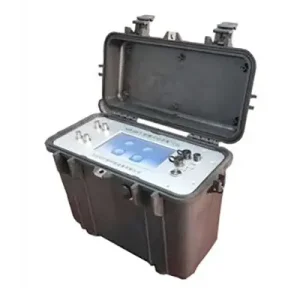
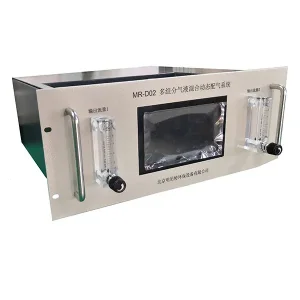
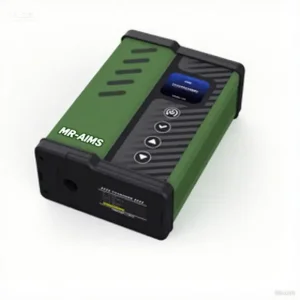
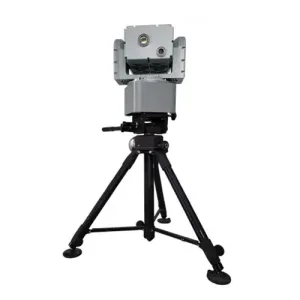
The global landscape for gas detection has shifted dramatically from localized, point-source sensors to sophisticated long-distance gas telemetry. As industrial complexes grow in size and complexity, the need for portable, high-precision instruments that can detect hazardous leaks from several kilometers away has become paramount. This evolution is driven by the necessity to protect personnel from toxic environments while maintaining continuous monitoring of vast infrastructures.
Modern telemeters utilize Fourier Transform Infrared (FTIR) technology, allowing for the identification of multiple gas components simultaneously across distances exceeding 3-5 kilometers, providing a critical "stand-off" safety margin.
With detection limits reaching the parts-per-billion (ppb) level, these devices ensure that even the smallest leaks are identified before they escalate into catastrophic events in petroleum or chemical facilities.
The future of gas monitoring lies in the fusion of Artificial Intelligence (AI) and spectral analysis. Current trends indicate a move toward:
Our MR-FAT series exemplifies these trends, utilizing custom algorithms to identify dozens of VOCs and industrial gases in seconds. This level of automation reduces the reliance on manual expert interpretation, democratizing high-end safety tech for field operators.
The Middle East represents the world's most demanding environment for gas detection technology. From the vast oil fields of Saudi Arabia to the petrochemical hubs in Qatar and the UAE, the requirement for Portable Long-Distance Gas Telemeters is governed by extreme climate and high-risk operations.
In refineries where H2S and other toxic gases pose a constant threat, long-distance monitoring allows safety officers to scan large areas from a vehicle or a remote tower, ensuring no "blind spots" exist in the facility's safety net.
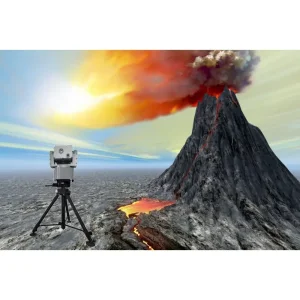
Active volcanic regions in the Middle East and surrounding territories require constant monitoring of SO2 and CO2 levels. Our remote volcanic gas monitoring systems provide early warnings without endangering scientists.
In the event of a chemical leak or military incident, the MR-ACT imaging systems provide instant visualization of toxic plumes, allowing for rapid evacuation and containment strategies.
Established in 2012, our group company has emerged as a powerhouse in the high-end instrument sector. By choosing a China-based factory for your gas detection needs, you benefit from a unique combination of innovation and efficiency.
We provide full-spectrum customization. Whether you need a specific gas library for your local region or a ruggedized casing for desert use, our R&D team can deliver tailored solutions faster than Western counterparts.
With localized sourcing and advanced manufacturing hubs, we ensure competitive pricing without compromising on the high-end components required for Fourier infrared technology.
Enterprise-level procurement for gas telemetry systems is no longer just about the price. Modern buyers in the Middle East and Russia prioritize:
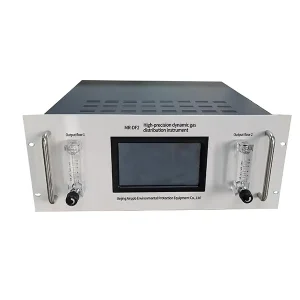
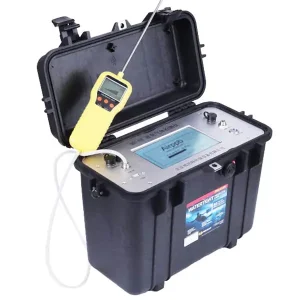
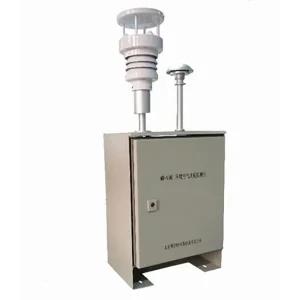
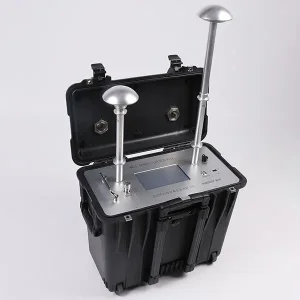
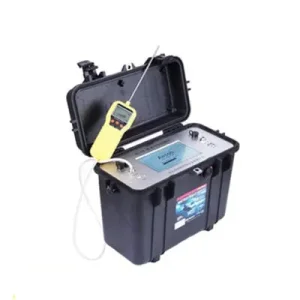
The group company was established in 2012 and is committed to the development and production of Fourier infrared gas remote sensing imaging early warning systems, ambient air quality monitors, high-precision dynamic gas distribution meters, multi-gas emergency detectors, ambient air analysis, detection and other related instruments and OEM /ODM various gas detectors; the company has a number of intellectual property rights.
Product quality strictly follows ISO9001 QUALITY MANAGEMENT SYSTEM CERTIFICATE, ISO14001 CERTIFICATE OF ENVIRONMENT MANAGEMENT SYSTEM CERTIFICATION, and ISO45001 CERTIFICATE OF OCCUPATIONAL HEALTH AND SAFETY MANAGEMENT SYSTEM CERTIFICATION. We comply with product certifications from relevant national departments, such as CPA, CCEP, CNAS/CMA test reports, etc., ensuring that our instruments provide the reliability needed for life-safety applications.
 Airppb