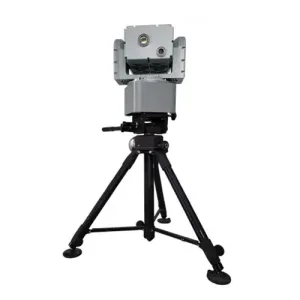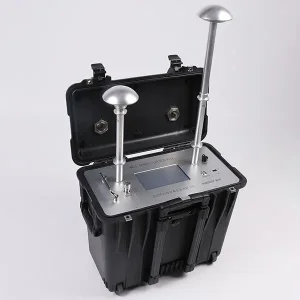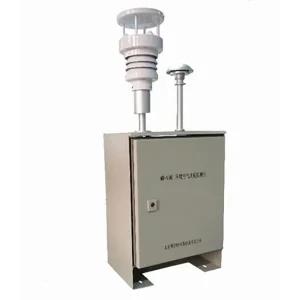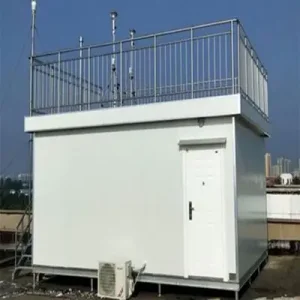
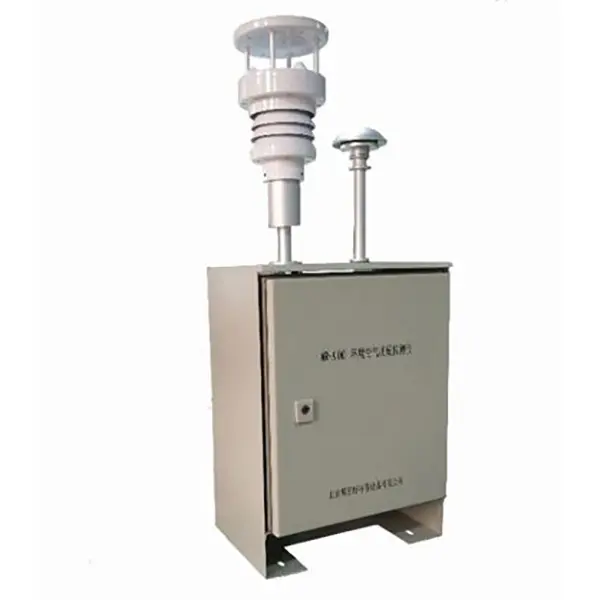
Middle East MR-A(M) Ambient Air Quality Monitor (Micro Air Station) Manufacturer, Ranking

MR-A(M) ambient air quality monitor (micro air station) is an instrument for monitoring gas parameters in the air. It can measure more than 30 kinds of gases, particulate matter and other pollutants and toxic and harmful gases in the air.

Product Description

Product Details

Fits For Models

MR-A(M) ambient air quality monitor (micro monitoring station) is an ambient air quality monitor that complies with the Class C method of the "Air and Exhaust Gas Monitoring and Analysis Methods" promulgated by the State Environmental Protection Administration. It can monitor at least four air quality monitors at the same time. The concentration of measured gases and particulate matter required by the Environmental Protection Agency.

Monitored environmental gases include: SO2, VOC, H2S, NH3, and can be expanded to monitor more than thirty types of NO2, CO, O3, NOX, CH4, HCl, HF, Cl2, CO2, etc. Gas; dust particle concentration includes: PM2.5, PM10, TSP; meteorological parameters: temperature, humidity, atmospheric pressure, wind speed, wind direction, illumination, ultraviolet radiation, solar radiation, noise, negative oxygen ions, etc.

Meet the "Ambient Air Quality Standards" (GB 3095-2012), "Odor Pollutant Emission Standards" (GB 14554-93), "Petroleum Refining Industry Pollutant Emission Standards" (GB 31570-2015), "Petrochemical Industry Pollutant Emission Standard" (GB 31571-2015) and other related specifications, using an original core algorithm to achieve high-precision detection with a resolution of 1 ppb, which can reach the national control station monitoring indicators, and has independent intellectual property rights (Patent No.: ZL2011 1 0364029.4). National metrology certification product, CMC number: Beijing 01150025 No. 01; has a comparison report issued by the China Academy of Environmental Sciences.
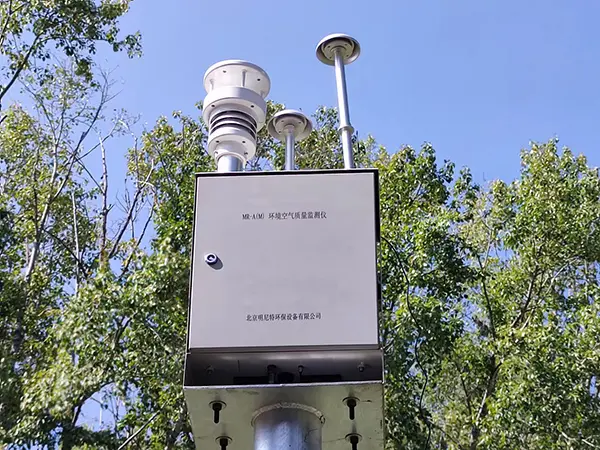
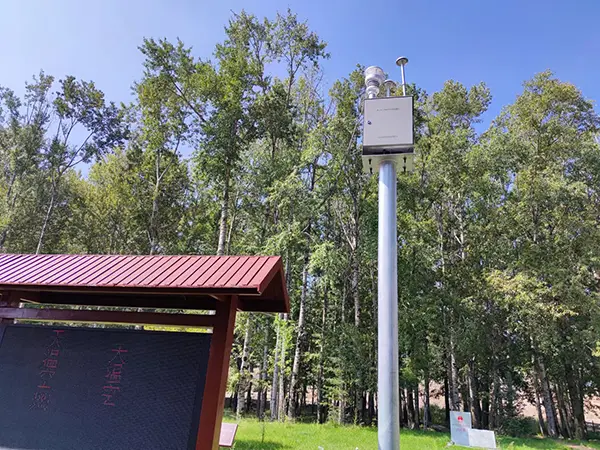
Ambient Air Quality Monitor Unit
Air Monitoring Equipment Details
Application Areas
  • Ambient air quality evaluation and monitoring
  • Supplementary monitoring of state-controlled sites
  • Urban ambient air quality monitoring
  • Monitoring of key areas (Industrial zones, parks)
  • Traffic road monitoring
  • Industrial park factory boundary monitoring
  • Scenic area environmental monitoring
Main Features
  • Using ppb level gas sensor, the instrument has high detection accuracy and stable performance;
  • Can be connected to various software platforms according to user needs;
  • IP43 outdoor application design, waterproof, shockproof, anti-corrosion, and salt spray resistant;
  • Constant temperature and dehumidification design ensures reliable operation of the instrument in extreme environments;
  • Military-grade design, with temperature, humidity and zero-point compensation;
  • Built-in imported constant flow sampling pump, more stable monitoring, faster response, service life ≥ 2 years;
  • The gas path is made of anti-adsorption polytetrafluoroethylene to ensure measurement accuracy and extend service life;
  • Can be installed in floor-standing installation, hoop installation, wall-mounted installation and other installation methods;
  • Small size, integrated monitoring, and the best choice for grid layout;
  • The product adopts a modular design, and key modules can be easily disassembled for maintenance;
  • Embedded LCD touch screen design, graphics, curves, charts and other display methods;
  • With temperature compensation, it can realize automatic correction of cross interference;
  • Automatically calculate hourly average, daily average, weekly average, monthly average, and historical data query;
  • Automatic conversion of monitoring data units: mg/m3, ppb, ppm;
  • Data storage is safe and reliable, with black box function to prevent data loss.
Monitoring Parameters
1. Gas Monitoring Part
Detection Parameters Measuring Range Resolution Accuracy Measurement Principle
Sulfur Dioxide (SO2) (0~5)mg/m³ 0.030mg/m³ (0.01ppm) ≤±2%F.S Electrochemistry
Hydrogen Sulfide (H2S) (0~1.5)mg/m³ 0.015mg/m³ (0.01ppm) ≤±2%F.S Electrochemistry
Ammonia (NH3) (0~3)mg/m³ 0.008mg/m³ (0.01ppm) ≤±2%F.S Electrochemistry
Organic Volatiles (VOC) (0~50)mg/m³ 0.004mg/m³ (2ppb) ≤±2%F.S Photoionization (PID)
2. Meteorological Monitoring Part
Meteorological Elements Measuring Range Resolution Accuracy Measurement Principle
Atmospheric Temperature -40~123.8℃ 0.1℃ ±0.3℃ Diode Junction Voltage
Relative Humidity 0~100%RH 0.05%RH ±3% RH Capacitive
Wind Direction 0-359.9º 0.1º ±3% Ultrasound
Wind Speed 0-60m/s 0.05m/s ±3% Ultrasound
Air Pressure 1~110 kPa 0.01 kPa ±0.05kPa Piezoresistive

Remarks: Parameters can be expanded to 30+ types of gases including CH4, HF, CL2, HCL, and more, customized according to requirements.

Technical Indicators
Sensor LifeElectrochemical/Infrared/PID: 2 years
Response Time< 60S
Operating Temperature-20℃ ~ +60℃
Working Humidity15% ~ 95%RH (No condensation)
Sampling MethodHigh strength constant flow sampling pump (1L/min)
DisplayEmbedded 7-inch LCD touch screen
Data InterfaceUSB, RS485, RS232, GSM/GPRS/3G/4G, RTU modbus
Protection LevelIP43
Working Power Supply110VAC~240VAC (Built-in battery for 8h backup)
Total Weight25KG
Dimensions1000 × 370 × 260mm (H x L x W)
Software & Connectivity

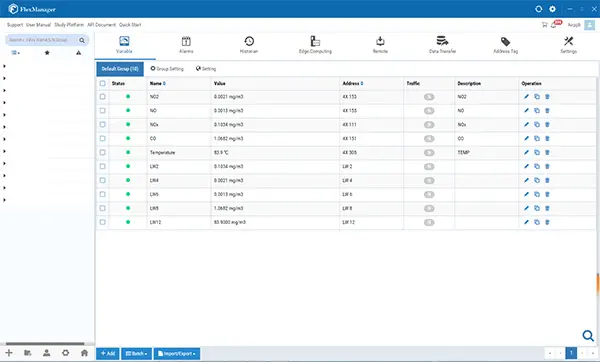
PC Software (IMS System)

The IMS system cloud server achieves functions such as connection management, data collection, and storage for remote devices. Key characteristics include:
  • Supports network cable, GPRS, and 4G connections;
  • Mobile APP remote monitoring and push notifications (SMS/WeChat);
  • Historical data recording and statistical analysis;
  • Supports breakpoint resumption and remote shutdown;
  • Permission classification for different user levels.
Software Management Interface

Mobile APP Functions

  • Unlimited monitoring points can be added;
  • Real-time alarm prompts and data viewing;
  • Remote device information management.
Frequently Asked Questions (FAQ)
Q1: What is the detection resolution of the MR-A(M) monitor? A: The monitor uses advanced core algorithms to achieve high-precision detection with a resolution of up to 1 ppb.
Q2: Can the device operate in extreme outdoor weather? A: Yes, it features an IP43 outdoor design that is waterproof and anti-corrosion, with constant temperature and dehumidification systems for extreme environments.
Q3: How long do the sensors typically last? A: Most electrochemical, infrared, and PID sensors have a service life of approximately 2 years.
Q4: Does the system continue to monitor during a power outage? A: Yes, the device has a built-in lithium battery that allows for continuous operation for up to 8 hours after a power failure.
Q5: What communication interfaces are supported for data transmission? A: It supports a wide range of interfaces including USB, RS485, RS232, and wireless options like GSM, GPRS, 3G, 4G, and RTU Modbus.
Q6: Can the monitoring parameters be customized? A: Yes, the system is modular and can be expanded to monitor over 30 types of gases and various meteorological parameters like rainfall, noise, and solar radiation.

Related Products