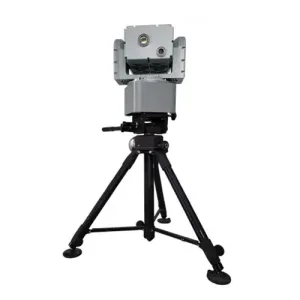
In the contemporary industrial landscape, the detection of Toxic Industrial Chemicals (TICs) has evolved from localized sensing to wide-area telemetry. Global industries—ranging from petrochemical complexes to urban defense sectors—are increasingly adopting Tic Gas Telemetry Imagers. These systems utilize passive infrared spectral imaging to "see" invisible gas clouds at distances exceeding several kilometers.
Unlike traditional point detectors that require physical contact with the gas, telemetry imagers provide real-time visualization, allowing operators to identify the source, composition, and drift direction of hazardous leaks without entering the danger zone. This technological shift is paramount in preventing catastrophic events in the oil-rich regions of the Middle East, where infrastructure is vast and environmental conditions are extreme.
The Middle East represents the epicenter of the world's energy supply. With massive refinery clusters in Saudi Arabia, the UAE, Qatar, and Kuwait, the need for robust Gas Telemetry Imaging is not just a safety requirement but an operational necessity. High ambient temperatures and sand-laden environments pose unique challenges for optical sensors.
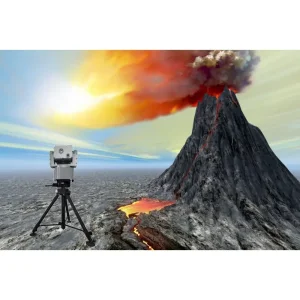
Our Middle East MR-ACT series is specifically engineered for these conditions. It features specialized optical coatings and thermal stabilization to ensure 24/7 monitoring of volcanic gas emissions, refinery flare stacks, and long-distance pipeline corridors. By integrating Fourier Transform Infrared (FTIR) technology, we provide the ability to distinguish between dozens of different hydrocarbon gases simultaneously in the harsh desert climate.
The future of gas telemetry lies in automated gas cloud identification. Modern systems now incorporate AI algorithms to filter out "false positives" caused by steam or heat haze, focusing solely on the spectral signature of TICs.
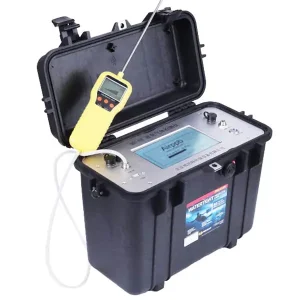
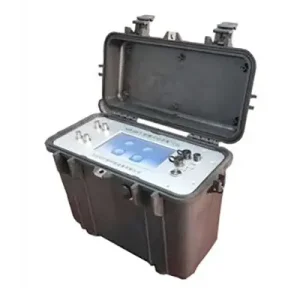
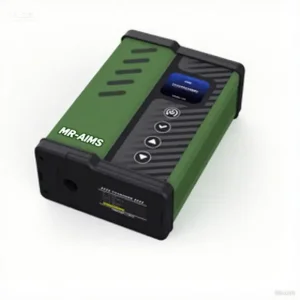
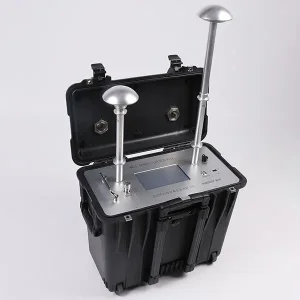
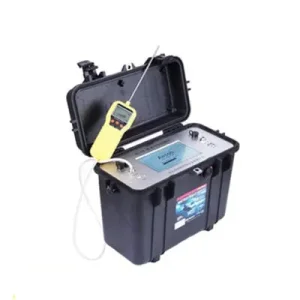
There is a growing demand for handheld IMS chemical identifiers and portable air quality monitors that offer lab-grade precision in the field. Our MR-AIMS series leads this trend in the petrochemical sector.
Real-time data streaming from remote volcanic or industrial sites to centralized command centers is becoming the standard. Our systems support multi-node networking for comprehensive city-wide or site-wide safety webs.
Combining thermal imaging with gas spectral imaging allows for better spatial context, helping emergency responders visualize the physical environment alongside the invisible chemical threat.
As a leading Chinese manufacturer established in 2012, we bridge the gap between high-end R&D and large-scale industrial production. Our facility is not just a production line; it is a center of excellence for infrared gas remote sensing.
Why global enterprises choose our brand:
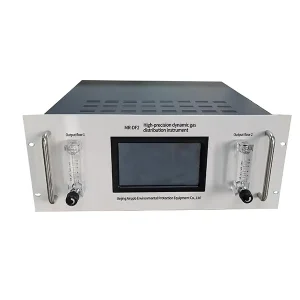
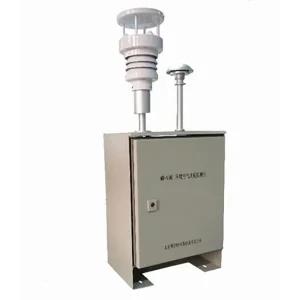
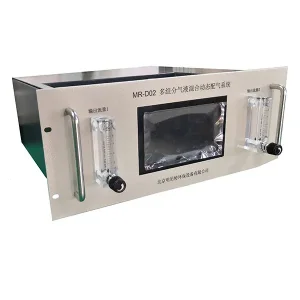
The group company was established in 2012 and is committed to the development and production of Fourier infrared gas remote sensing imaging early warning systems, ambient air quality monitors, high-precision dynamic gas distribution meters, multi-gas emergency detectors, ambient air analysis, detection and other related instruments and OEM /ODM various gas detectors; the company has a number of intellectual property rights.
Product quality strictly follows ISO9001 QUALITY MANAGEMENT SYSTEM CERTIFICATE, ISO140001 CERTIFICATE OF ENVIRONMENT MANAGEMENT SYSTEM CERTIFICATION, ISO45001 CERTIFICATE OF OCCUPATIONAL HEALTH AND SAFETY MANAGEMENT SYSTEM CERTIFICATION. Comply with product certifications from relevant national departments, such as CPA, CCEP, CNAS/CMA test reports, etc.
 Airppb