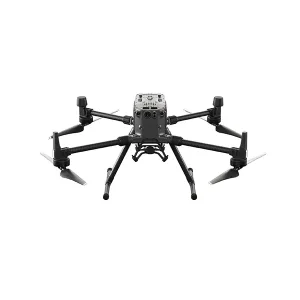
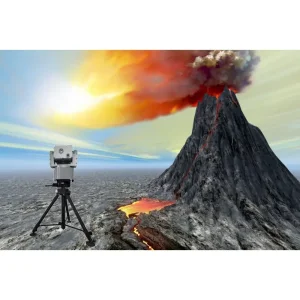
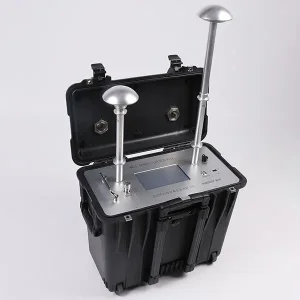
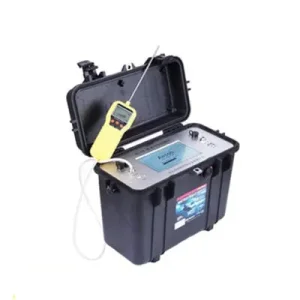
The global industrial landscape is undergoing a paradigm shift in environmental safety and hazardous material monitoring. As industrial complexes become more sprawling and complex, traditional stationary sensors are no longer sufficient. The integration of Fourier Transform Infrared (FTIR) Telemetry with UAV (Unmanned Aerial Vehicle) technology has emerged as the "Gold Standard" for remote hazardous gas detection.
In regions like North America, Europe, and especially the Middle East, the demand for Toxic Gas Drones is skyrocketing. These systems provide a critical layer of safety by identifying invisible toxic clouds from kilometers away, allowing emergency responders and industrial operators to act before a leak becomes a catastrophe. Currently, the industry is transitioning from simple detection to "Visualized Identification," where telemetry systems provide a real-time heat map of gas concentrations.
Removing personnel from high-risk zones by using drone-mounted Fourier telemetry for initial site assessments.
The ability to detect and quantify dozens of different VOCs and toxic gases simultaneously using a single FTIR sensor.
Deploying an aerial telemetry system in under 5 minutes to cover square kilometers of industrial territory.
Modern Fourier telemetry is no longer just about hardware. The trend is moving toward AI algorithms that can filter out atmospheric interference (like humidity or sand) to identify trace amounts of toxic gases with 99% accuracy.
Previously, Fourier Transform Infrared systems were bulky laboratory instruments. The current trend focuses on ultra-lightweight, ruggedized modules that can be mounted on commercial enterprise drones without sacrificing spectral resolution.
The future lies in drone swarms where multiple telemetry-equipped drones work in sync to provide a 3D volumetric map of a gas leak, calculating dispersion patterns in real-time for urban planning and evacuation.
Integration with 5G/6G networks allows telemetry data to be uploaded directly to a command center, enabling global experts to analyze a local leak in the Middle East from anywhere in the world.
The Middle East represents one of the most demanding environments for gas monitoring technology. With extreme temperatures, high salinity in coastal areas, and the world's most dense concentration of oil and gas infrastructure, "standard" equipment often fails. Our Fourier Telemetry Drones are specifically engineered for these conditions.
Years of R&D
Detectable Gases
Certified Quality
Telemetry Range
As a leading Chinese manufacturer, we combine the efficiency of the world's most robust supply chain with cutting-edge spectral research. We don't just assemble; we innovate.
We provide full customization for Middle Eastern clients, from localized software interfaces in Arabic to hardware modifications for high-heat endurance.
Our vertical integration allows us to offer Fourier Telemetry systems at a fraction of the cost of Western competitors without compromising on precision.
Established shipping routes to Riyadh, Dubai, Kuwait City, and Doha, ensuring rapid delivery and on-site technical support.
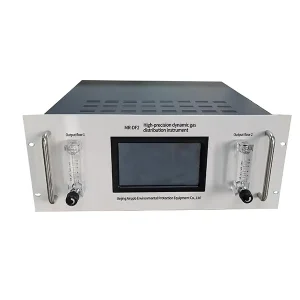
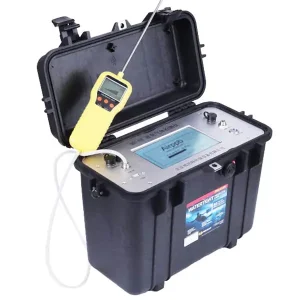
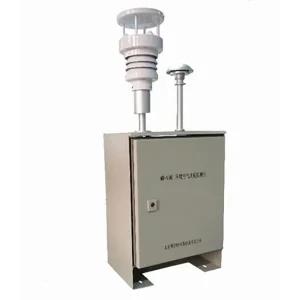
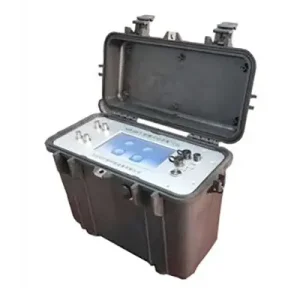
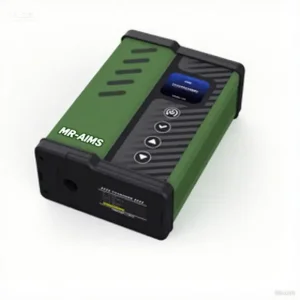
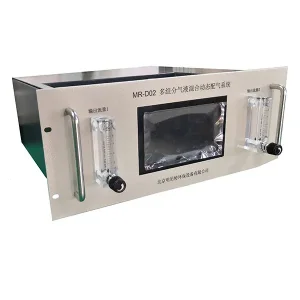
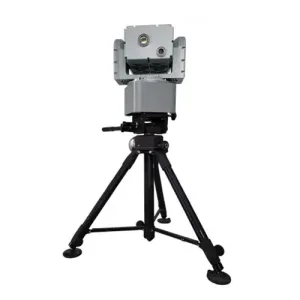
The group company was established in 2012 and is committed to the development and production of Fourier infrared gas remote sensing imaging early warning systems, ambient air quality monitors, high-precision dynamic gas distribution meters, multi-gas emergency detectors, ambient air analysis, detection and other related instruments and OEM /ODM various gas detectors.
The company has a number of intellectual property rights. Product quality strictly follows:
Our systems comply with rigorous product certifications from relevant national and international departments, such as CPA, CCEP, CNAS/CMA test reports, ensuring that our clients in the Middle East receive only the most reliable and trusted technology.
 Airppb