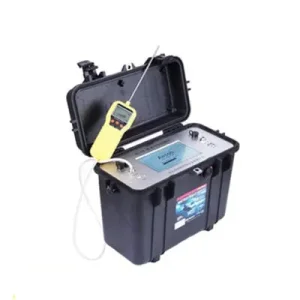
In the contemporary industrial era, the demand for Toxic Gas Telemeter technology has transcended traditional localized sensing. As global industrialization accelerates, particularly in sectors like petrochemicals, mining, and military defense, the need for wide-area, real-time, and high-precision gas monitoring has become paramount. The global market is shifting from "contact detection" to "remote sensing telemetry," driven by the necessity to protect human lives and the environment from hazardous leaks before they escalate into catastrophes.
Current industrial trends emphasize the integration of Fourier Transform Infrared (FTIR) technology and AI-driven imaging. These systems allow for the visualization of invisible gas clouds over kilometers, providing critical lead time for emergency responses. From the oil fields of the Middle East to the industrial corridors of Europe and Russia, toxic gas telemeters are now considered indispensable infrastructure for ESG (Environmental, Social, and Governance) compliance and operational safety.
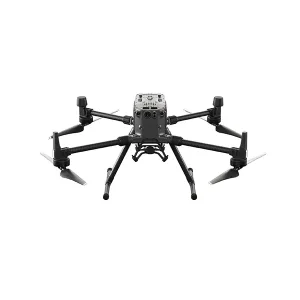
Utilizing hyperspectral imaging and IR telemetry to detect toxic gases from distances up to 5km without physical contact.
Advanced algorithms for automated gas cloud identification and leak trajectory prediction using AI-enhanced vision.
Systems engineered to meet stringent international standards including CPA, CCEP, and ISO certifications.
Industrial buyers today look for more than just a product; they seek reliability, precision, and seamless integration into existing safety protocols. The procurement landscape for toxic gas telemeters is characterized by several key requirements:
Fenceline monitoring in refineries to detect VOCs, HF, and NH3 leaks in real-time, preventing large-scale environmental disasters.
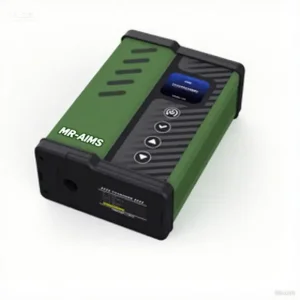
Deployment of handheld and stationary IMS identifiers and imaging systems for chemical warfare agent (CWA) detection and battlefield safety.
Rapid deployment during industrial fires or chemical spills to provide first responders with a safe "visual" map of toxic plumes.
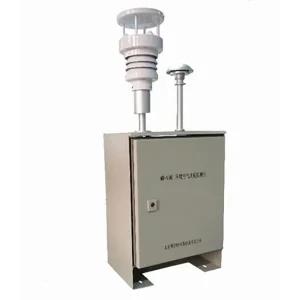
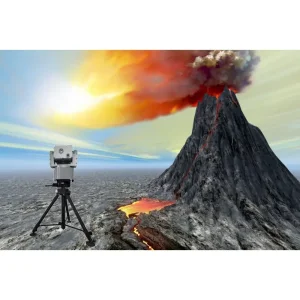
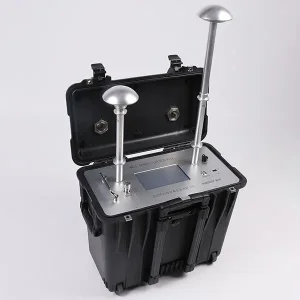
Localized application scenarios vary significantly. For instance, in Volcanic Gas Monitoring in the Middle East or Southeast Asia, instruments must withstand extreme heat and corrosive SO2 environments. In Urban Ambient Air Quality monitoring, the focus shifts to micro-level detection of NOx and ozone using compact stations. Our group company specializes in customizing these solutions, providing OEM/ODM services that adapt our core FTIR and IMS technologies to specific regional climates and regulatory requirements.
As a leading Chinese manufacturer, our strength lies in the perfect fusion of high-end R&D and efficient supply chain management. Since our establishment in 2012, we have focused on breaking the monopoly of high-end gas remote sensing technology.
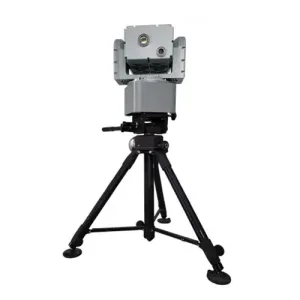
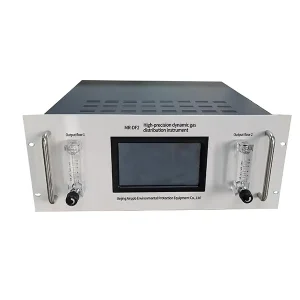
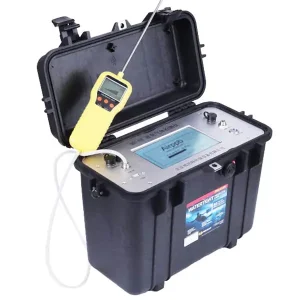
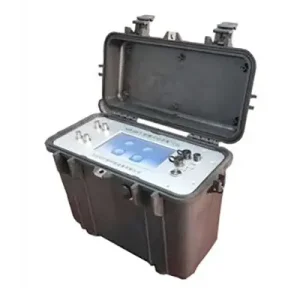
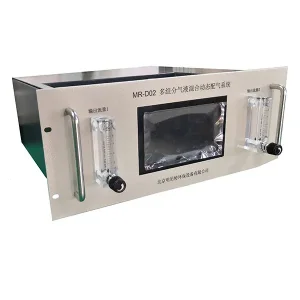
The group company was established in 2012 and is committed to the development and production of Fourier infrared gas remote sensing imaging early warning systems, ambient air quality monitors, high-precision dynamic gas distribution meters, multi-gas emergency detectors, and other related instruments. Our expertise in OEM/ODM for various gas detectors has made us a trusted partner for global enterprises.
Our commitment to quality is validated by our ISO9001 QUALITY MANAGEMENT SYSTEM CERTIFICATE, ISO14001 CERTIFICATE OF ENVIRONMENT MANAGEMENT SYSTEM CERTIFICATION, and ISO45001 CERTIFICATE OF OCCUPATIONAL HEALTH AND SAFETY MANAGEMENT SYSTEM CERTIFICATION. We ensure every instrument leaving our factory is a testament to our precision and reliability.
 Airppb