In the modern industrial and public safety landscape, Emergency Venue Gas Warning systems have transitioned from optional safety measures to mandatory infrastructure. Globally, the demand for sophisticated gas detection is surging, driven by stringent safety regulations such as OSHA in the United States, EU-OSHA in Europe, and increasingly rigorous environmental standards in the Asia-Pacific region.
Large-scale venues—including sports stadiums, international exhibition centers, underground transportation hubs, and massive industrial complexes—face unique challenges. These spaces require monitoring for a vast array of potential threats, from combustible gases and toxic industrial chemicals to subtle changes in ambient air quality that could signal a fire or a chemical leak. The global market is currently seeing a shift from "point detection" to "area telemetry," where remote sensing technologies like Fourier Transform Infrared (FTIR) imaging allow for real-time visualization of gas clouds before they reach dangerous concentrations.
The global gas detection market is projected to reach billions by 2030, with the "Emergency & Venue" segment growing at the highest CAGR. This is due to the increasing frequency of large-scale public events and the expansion of the "Smart City" initiative, where gas sensors are integrated into the broader urban safety network.
Modern systems are no longer isolated. Real-time data is uploaded to cloud platforms, allowing emergency responders to visualize gas plumes on digital twins of the venue via mobile devices.
Artificial Intelligence is being used to filter out "false positives" caused by humidity or non-toxic aerosols, ensuring that emergency alarms are only triggered by genuine threats.
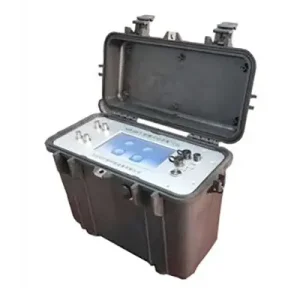
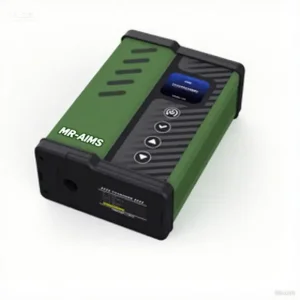
The trend is moving toward portable, handheld devices that offer the same precision as laboratory-grade equipment, such as our MR-AIMS Handheld IMS Chemical Identifier.
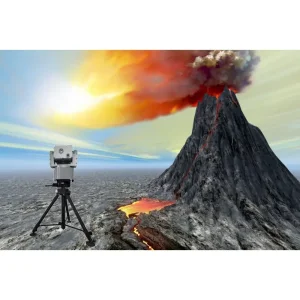
Using infrared telemetry to "see" invisible gases. This technology allows for the monitoring of large open-air venues where traditional sensors would be impractical.
Development of ultra-low power sensors for long-term deployment in remote areas or large venues without the need for frequent maintenance.
Standardized protocols (Modbus, MQTT, 4-20mA) ensuring that gas detectors can communicate with existing Building Management Systems (BMS).
International buyers prioritize products with ISO9001, ISO14001, and ISO45001 certifications. For specific markets, CPA (Pattern Approval) and CCEP (Environmental Protection) are critical benchmarks of reliability.
Every venue is different. Procurement officers look for manufacturers capable of OEM/ODM services to tailor sensor sensitivity, housing durability (IP ratings), and communication interfaces to local needs.
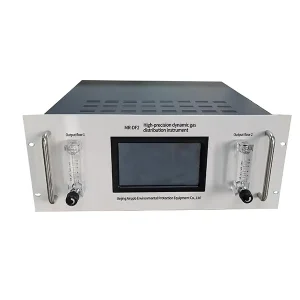
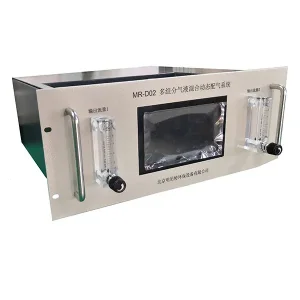
Beyond the hardware, the availability of high-precision calibration tools, like our Dynamic Gas Distribution Meters, is a major factor in long-term procurement decisions.
Global enterprises—from oil and gas giants in the Middle East to environmental agencies in Europe—require a partner who understands the nuances of local application. Whether it's the high-heat resistance needed for desert environments or the explosion-proof requirements of petrochemical plants, the demand is for integrated safety ecosystems rather than standalone sensors.
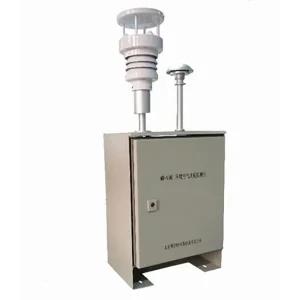
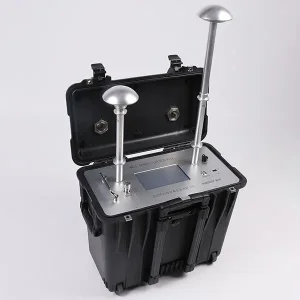
In high-traffic areas like subways and stadiums, our Ambient Air Quality Monitors provide a dual function: ensuring daily comfort for citizens and acting as an early warning system for chemical emergencies or fire-related smoke inhalation risks.
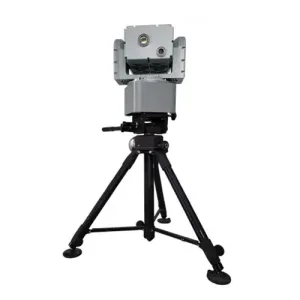
The MR-ACT Gas Telemetry Imaging System is designed for the "fence-line" monitoring of refineries. It can detect leaks from hundreds of meters away, providing a visual map of the gas concentration to prevent catastrophic explosions.
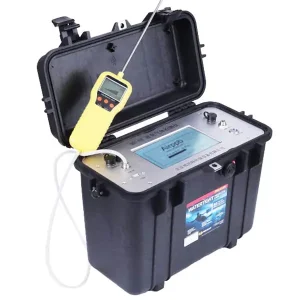
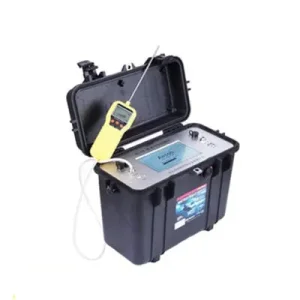
During emergency response, the MR-AX Multi-Gas Detector allows teams to identify dozens of unknown gases instantly. Its rugged design and high precision make it an essential tool for CBRN (Chemical, Biological, Radiological, and Nuclear) defense units.
Specialized applications like volcanic gas monitoring in the Middle East or Russia require instruments like the MR-DO2 Gas-Liquid Mixing Instrument to calibrate sensors in extreme conditions, ensuring data accuracy for geological safety.
As a leading Chinese manufacturer established in 2012, we combine the efficiency of China's world-class supply chain with cutting-edge R&D that rivals global standards. Our advantage lies in three core pillars:
The group company was established in 2012 and is committed to the development and production of Fourier infrared gas remote sensing imaging early warning systems, ambient air quality monitors, high-precision dynamic gas distribution meters, multi-gas emergency detectors, ambient air analysis, detection and other related instruments and OEM /ODM various gas detectors; the company has a number of intellectual property rights.
Product quality strictly follows ISO9001 QUALITY MANAGEMENT SYSTEM CERTIFICATE, ISO14001 CERTIFICATE OF ENVIRONMENT MANAGEMENT SYSTEM CERTIFICATION, ISO45001 CERTIFICATE OF OCCUPATIONAL HEALTH AND SAFETY MANAGEMENT SYSTEM CERTIFICATION. Comply with product certifications from relevant national departments, such as CPA, CCEP, CNAS/CMA test reports, etc. We pride ourselves on being a reliable partner for industrial safety and environmental monitoring worldwide.
 Airppb