In an era of increasing geopolitical complexity and industrial expansion, the demand for Anti-Terrorist Gas Telemetry has transitioned from a niche military requirement to a critical component of global civil safety and industrial security. As urban centers become more densely populated and critical infrastructure—such as oil refineries and chemical plants—becomes more integrated, the risk of chemical threats, whether accidental or intentional, has escalated.
The global market for gas remote sensing is currently witnessing a CAGR of over 8.5%, driven by the adoption of Fourier Transform Infrared (FTIR) technology. Unlike traditional point-source detectors, telemeter systems allow for the identification of toxic gas clouds from distances of several kilometers, providing vital reaction time for first responders and military units.
Governments worldwide are investing in telemetry to protect public landmarks, transportation hubs, and border crossings from volatile organic compounds (VOCs) and chemical warfare agents (CWAs).
The transition from "detect and react" to "predict and prevent" is reshaping how the petroleum and petrochemical industries handle leak detection and repair (LDAR).
Standard electrochemical sensors are being replaced by multi-spectral imaging and IMS technologies for higher precision and lower false alarm rates.
Rankings in the industry are now determined by the speed of cloud identification and the ability to integrate with AI-driven early warning networks.
Modern telemeters, such as the MR-ACT series, are now equipped with AI algorithms that can visualize gas concentration gradients in real-time. This "Gas Imaging" allows security forces to see the invisible, identifying the source and direction of a hazardous plume within seconds.
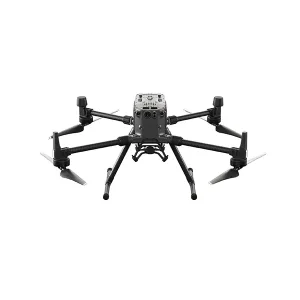
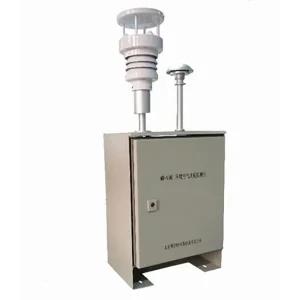
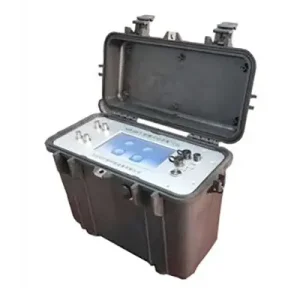
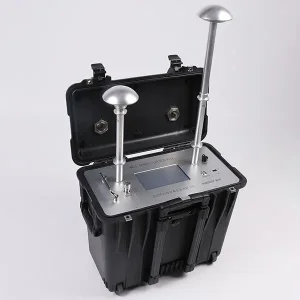
There is a growing trend toward micro-air stations and portable high-precision monitors like the MR-A(M). These units can be deployed via drones or mobile patrol vehicles, creating a dynamic web of protection that moves with the threat.
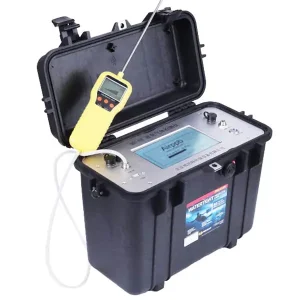
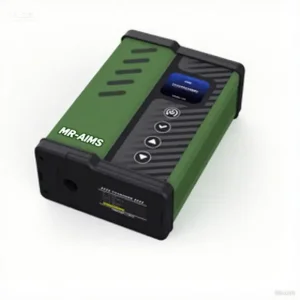
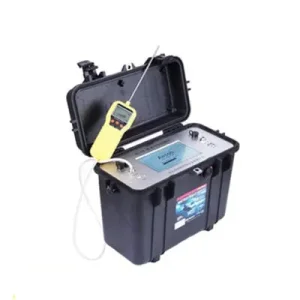
Combining Ion Mobility Spectrometry (IMS) for handheld identification with FTIR for long-range telemetry is the current "gold standard" for military and anti-terrorist operations. This ensures that while a threat is identified from afar, ground teams can confirm chemical signatures on-site with devices like the MR-AIMS.
The Middle East represents a unique environment where high temperatures, sandstorms, and critical economic infrastructure create a demanding atmosphere for gas detection equipment. Our brand has secured top rankings in this region due to our localized engineering.
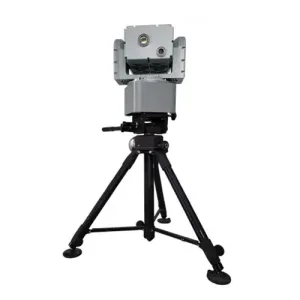
With some of the world's largest refineries, Middle Eastern nations utilize the MR-FAT Fourier Transform Telemeter to monitor for methane leaks and toxic hydrogen sulfide (H2S) across vast areas, preventing catastrophic explosions and environmental disasters.
In major cities and during high-profile events, handheld chemical identifiers and remote imaging systems are deployed to protect against potential non-conventional threats in crowded spaces like stadiums and airports.
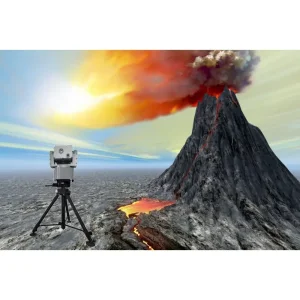
Localized applications include the MR-ACT Remote Volcanic Gas Monitoring System. In volcanic regions within the Middle East and surrounding territories, monitoring SO2 and CO2 levels is vital for early evacuation warnings.
Established in 2012, our group company has emerged as a global leader in high-end gas sensing technology. Our strength lies in our ability to combine mass-production efficiency with military-grade precision.
When international government agencies or large-scale enterprises procure anti-terrorist gas telemeters, they look for three primary factors: Reliability, Scalability, and Traceability.
1. Multi-Component Detection: The ability to measure dozens of gases simultaneously (as seen in our MR-AX series) is a prerequisite for modern environmental and emergency response contracts.
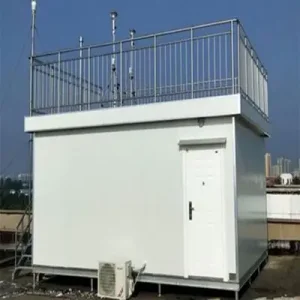
2. Harsh Environment Durability: Equipment must withstand the extreme heat of the Middle East and the humidity of Southeast Asian industrial zones. Our portable and automatic stations are built with military-grade housings.
3. Data Integration: Our systems offer seamless output for centralized command centers, enabling a unified view of the urban or industrial "gas landscape."
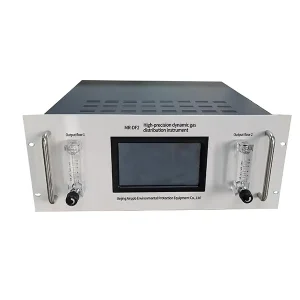
Since our founding in 2012, we have committed to the development and production of Fourier infrared gas remote sensing imaging early warning systems. Our journey began with a focus on ambient air quality monitors and has expanded into high-precision dynamic gas distribution meters and multi-gas emergency detectors.
Our commitment to excellence is reflected in our strict adherence to the ISO9001 Quality Management System, ISO14001 Environment Management System, and ISO45001 Occupational Health and Safety Management System. This ensures that every telemeter and detector leaving our factory is capable of performing in the most high-stakes environments, from military battlefields to petrochemical complexes.
 Airppb