In an era characterized by increasing geopolitical complexities and rapid industrialization, the demand for sophisticated Chemical Warfare Agent (CWA) Telemeters has transcended traditional military boundaries. Today, these instruments are pivotal in the global environmental protection industry, serving as the first line of defense against both intentional threats and accidental industrial leaks.
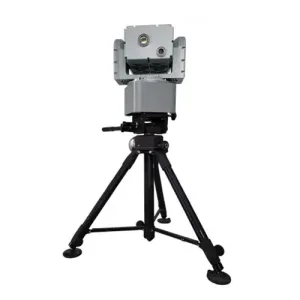
Technologically, the industry is shifting from point-source detection to remote sensing telemetry. Fourier Transform Infrared (FTIR) spectroscopy remains the gold standard, allowing for the identification of chemical plumes at distances ranging from several kilometers. This non-contact approach is essential for protecting emergency responders and civilians during hazardous material (HAZMAT) incidents.
The global market is currently segmented into high-end defense applications, industrial monitoring for the petrochemical sector, and municipal emergency response units. Major economies in North America, the European Union, and Asia-Pacific are investing heavily in "Smart City" infrastructures where air quality monitors and gas identifiers are integrated into a centralized IoT network for real-time urban safety monitoring.
Years of R&D
Countries Served
Chemicals Identified
Certified Quality
Modern telemeters now utilize machine learning algorithms to filter out background noise and spectral interference, significantly reducing false alarm rates in complex urban or industrial environments.
The shift from simple gas detection to full-field imaging allows operators to visualize gas plumes in real-time, tracking their dispersion patterns and predicting potential impact zones with high precision.
Telemeters are no longer standalone units. Modern systems synchronize data to the cloud, enabling national-level environmental monitoring and instant coordination between multiple emergency units.
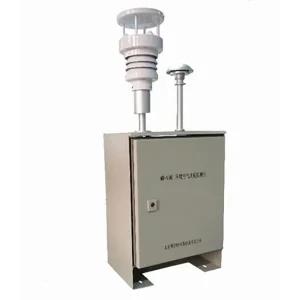
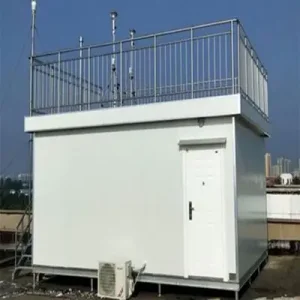
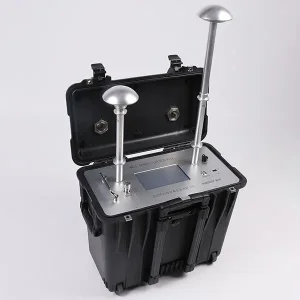
Middle East Oil & Gas: In regions dominated by petroleum and petrochemical industries, the MR-A(S) and MR-A(M) series are critical for monitoring volatile organic compounds (VOCs) and ensuring that industrial emissions do not pose a threat to surrounding residential areas. These stations operate autonomously in harsh, high-temperature climates.
Military & Defense: For defense agencies in Russia and Asia, the MR-ACT Imaging Early Warning Systems provide a "see-it-before-it-touches-you" capability. Being able to detect chemical warfare agents at a distance is the only way to ensure the safety of military personnel in active conflict zones or during border surveillance.
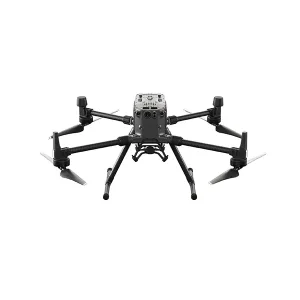
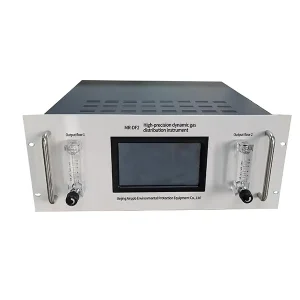
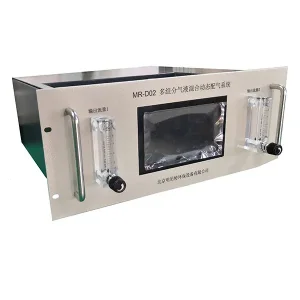
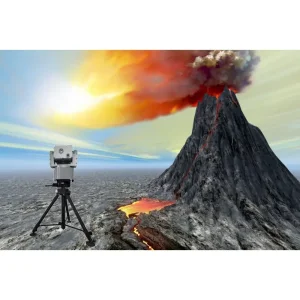
Environmental Disaster Management: Following volcanic eruptions or industrial explosions, the MR-ACT Remote Volcanic Gas Monitoring System and MR-DF2 high-precision dynamic gas distribution instruments allow scientists and responders to analyze atmosphere toxicity without entering the danger zone.
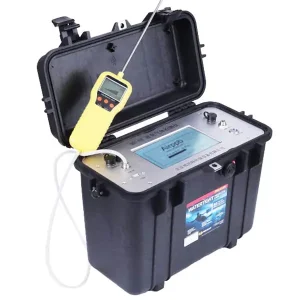
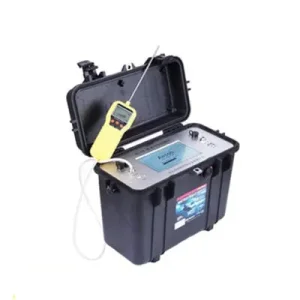
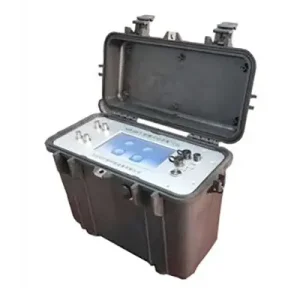
Global procurement teams prioritize reliability, spectral library breadth, and maintenance simplicity. Our devices are engineered to be field-ready, with automated calibration routines (using our MR-DF3 portable gas meters) and ruggedized enclosures that meet international military and industrial standards.
As a leading Chinese manufacturer established in 2012, we combine massive production scalability with cutting-edge R&D. Our group company is not just a manufacturer; we are a hub for innovation in gas sensing technology.
The group company was established in 2012 and is committed to the development and production of Fourier infrared gas remote sensing imaging early warning systems, ambient air quality monitors, high-precision dynamic gas distribution meters, multi-gas emergency detectors, ambient air analysis, detection and other related instruments and OEM /ODM various gas detectors; the company has a number of intellectual property rights.
Product quality strictly follows ISO9001 QUALITY MANAGEMENT SYSTEM CERTIFICATE, ISO14001 CERTIFICATE OF ENVIRONMENT MANAGEMENT SYSTEM CERTIFICATION, ISO45001 CERTIFICATE OF OCCUPATIONAL HEALTH AND SAFETY MANAGEMENT SYSTEM CERTIFICATION. Comply with product certifications from relevant national departments, such as CPA, CCEP, CNAS/CMA test reports, etc.
This commitment to excellence ensures that every telemeter leaving our facility is capable of performing in the most demanding environments on Earth, providing accurate, life-saving data when it matters most.
 Airppb