Advanced instrumentation for industrial safety and chemical detection
In the modern industrial era, the petroleum and petrochemical industry stands as the backbone of global energy, yet it faces unprecedented challenges regarding fire safety and hazardous chemical leakages. As facilities scale up and complexity increases, the demand for specialized Fire Hazardous Chemical Monitoring Vehicle Equipment has transitioned from a luxury to a critical regulatory requirement.
The global market for chemical emergency response vehicles is projected to grow significantly as Middle Eastern refineries and North American shale gas projects modernize their safety protocols.
Stricter environmental laws (such as those from the EPA and EU directives) demand real-time telemetry and imaging of VOCs and toxic leaks to prevent catastrophic fires.
High-precision monitors drastically reduce insurance premiums for petrochemical plants by providing a first-line defense against unmonitored gas accumulation.
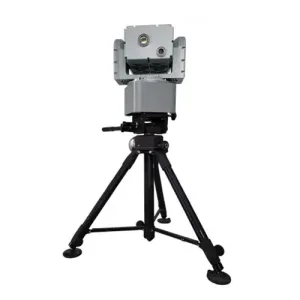
The transition from manual sampling to Fourier Transform Infrared (FTIR) gas remote sensing imaging has revolutionized how we perceive invisible threats. Modern monitoring vehicles are no longer just transport units; they are mobile command centers equipped with AI-driven analytics.
Modern equipment now feeds data directly into "Digital Twins" of petrochemical plants, allowing fire departments to simulate gas dispersion patterns in real-time during an emergency. This synergy between hardware (sensors) and software (AI) defines the current ranking of top-tier manufacturers.
Procurement teams for national oil companies (NOCs) and global emergency responders prioritize Reliability, Precision, and Adaptability. Our equipment is engineered to perform across diverse geographical demands:
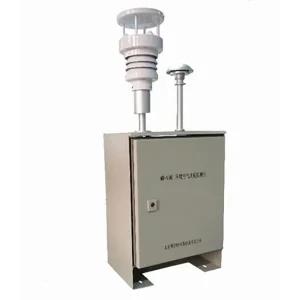
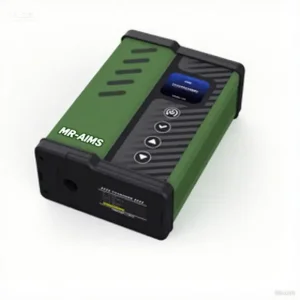
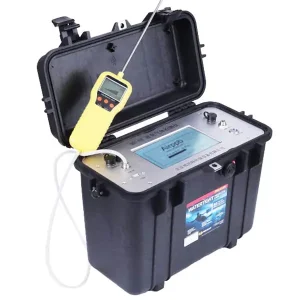
High-temperature resilience is mandatory. Our MR-A(M) micro-stations are tested to withstand ambient temperatures exceeding 55°C while maintaining sensor accuracy for sulfur compounds common in desert refineries.
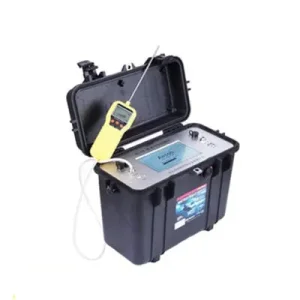
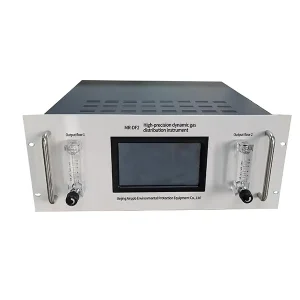
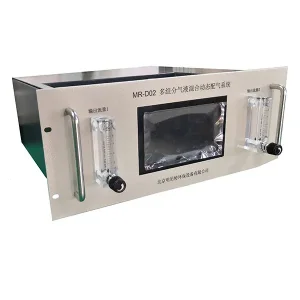
Equipment must operate in sub-zero environments. Our multi-component gas-liquid mixing instruments feature internal heating systems to prevent chemical condensation in freezing climates.
Coastal petrochemical hubs require salt-spray resistant housings. We utilize IP67-rated materials and anti-corrosive coatings for all vehicle-mounted monitors.
As a leading Chinese group company established in 2012, we combine massive production capacity with cutting-edge R&D expertise. Here is why global enterprises choose us:
From the core Fourier infrared gas sensing chips to the vehicle integration, we control the entire supply chain, ensuring lower costs and faster delivery times than Western competitors.
We are not just a factory; we are a certified technology hub. Our products strictly follow ISO9001, ISO14001, and ISO45001 standards. We hold CPA, CCEP, and CNAS/CMA test reports, ensuring global compliance.
We empower other brands through high-quality OEM/ODM services. Our ability to customize multi-gas detectors to specific regional requirements makes us a preferred partner for international safety firms.
Experience & Expertise: With over a decade of dedication to the development of Fourier infrared gas remote sensing imaging early warning systems, our team possesses the deep technical knowledge required to solve complex gas detection challenges in the most hazardous environments on earth.
Our ranking at the top of the "Petroleum And Petrochemical Industry Fire Hazardous Chemical Monitoring Vehicle Equipment" sector is driven by our commitment to innovation in several core areas:
This comprehensive suite of tools ensures that whether you are monitoring ambient air quality in a residential zone or managing a Tier-3 chemical fire, our equipment provides the authoritative data needed for critical decision-making.
Discover our full range of gas detection and environmental monitoring products
 Airppb