The global air quality monitoring market has undergone a paradigm shift from traditional stationary stations to highly mobile, onboard air quality monitors and micro-air stations. In the current industrial landscape, the demand for real-time data is paramount. Rapid urbanization, combined with stringent environmental regulations in the EU and North America, has catalyzed the adoption of Fourier Transform Infrared (FTIR) technology and remote sensing imaging systems.
On a global scale, commercial sectors—ranging from smart city management to large-scale industrial park monitoring—are seeking solutions that offer high precision, low maintenance, and cloud-integrated data visualization. The move toward "onboard" systems allows for dynamic mapping of pollution plumes, providing a more comprehensive environmental profile than fixed-point sensors ever could.
The AQM market is projected to grow at a CAGR of 7.2% through 2030, driven by AI integration.
Global enterprises are prioritizing monitors that meet ISO and EPA standards to avoid heavy environmental fines.
The "Onboard Air Quality Monitor" industry is currently being reshaped by four major technological trends:
Modern sensors no longer just report CO2 or PM2.5 levels; they use machine learning algorithms to predict pollution dispersal based on meteorological data. This is critical for emergency responses in petrochemical leaks.
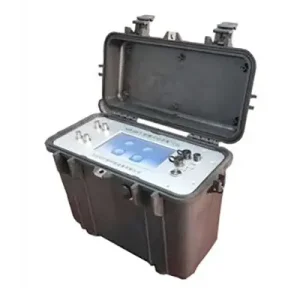
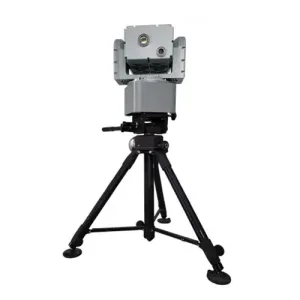
What once required a laboratory-sized instrument (Fourier Transform Infrared) is now being adapted into portable and onboard units like our MR-FAT series, allowing for remote sensing imaging of gases from a distance.
The "Internet of Sensors" allows for thousands of onboard monitors to sync to a central command center, providing a live "heat map" of air quality across an entire region or country.
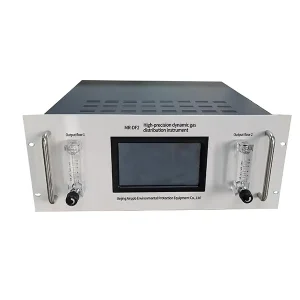
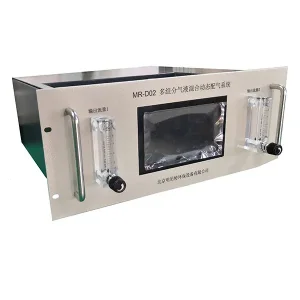
There is a rising need for instruments that can detect over 50+ VOCs and hazardous gases simultaneously without cross-interference, a hallmark of our high-precision dynamic gas distribution meters.
The Middle East presents unique environmental challenges that require specialized monitoring technology. Our Middle East Onboard Air Quality Monitor brand ranking reflects products designed for these extreme conditions:
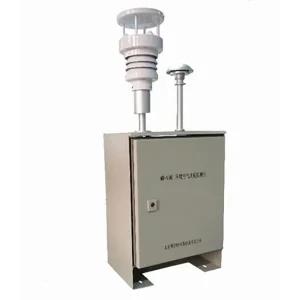
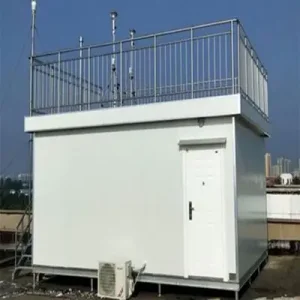
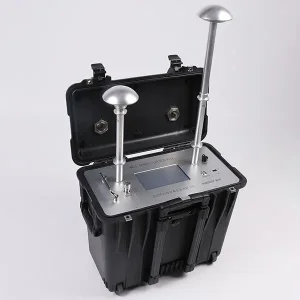
In countries like Saudi Arabia, UAE, and Qatar, monitoring fugitive emissions in extreme heat is vital. Our MR-A(S) automatic stations are engineered with robust cooling systems and high-precision sensors to withstand temperatures exceeding 50°C while monitoring volatile organic compounds (VOCs).
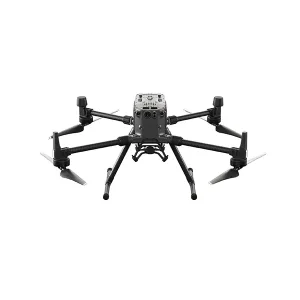
Middle Eastern "Future Cities" utilize onboard monitors on public transport and drones to ensure the air quality remains within "Healthy City" parameters, integrating data into urban AI management systems.
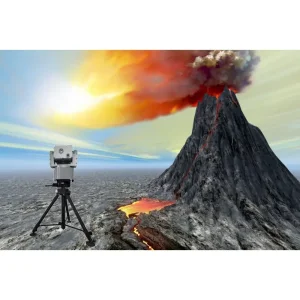
As seen with the MR-ACT Remote Volcanic Gas Monitoring System, there is a niche but critical demand for monitoring tectonic and volcanic gases to ensure the safety of surrounding communities in specific geological zones.
As a leading developer and manufacturer established in 2012, our group company offers a unique value proposition for global procurement:
The group company was established in 2012 and is committed to the development and production of Fourier infrared gas remote sensing imaging early warning systems, ambient air quality monitors, high-precision dynamic gas distribution meters, multi-gas emergency detectors, ambient air analysis, detection and other related instruments and OEM /ODM various gas detectors; the company has a number of intellectual property rights.
Product quality strictly follows ISO9001 QUALITY MANAGEMENT SYSTEM CERTIFICATE, ISO140001 CERTIFICATE OF ENVIRONMENT MANAGEMENT SYSTEM CERTIFICATION, and ISO45001 CERTIFICATE OF OCCUPATIONAL HEALTH AND SAFETY MANAGEMENT SYSTEM CERTIFICATION. We comply with product certifications from relevant national departments, such as CPA, CCEP, CNAS/CMA test reports, etc.
Our factory in China leverages the world's most robust electronics and optical supply chain. This allows us to provide high-precision dynamic gas distribution instruments and IMS chemical identifiers at a cost-to-performance ratio that Western competitors cannot match. We provide rapid prototyping for OEM clients and large-scale manufacturing for government-level environmental projects.
When global enterprises procure Onboard Air Quality Monitors, they aren't just buying hardware; they are investing in data integrity. Our expertise in Fourier infrared gas remote sensing imaging places us at the forefront of the industry. This technology is essential for detecting leaks in massive industrial complexes from distances up to several kilometers, ensuring worker safety and environmental compliance.
Our authority is backed by a robust portfolio of intellectual property and consistent top-tier rankings in Middle East and Russian industrial equipment benchmarks. We provide full technical support, from initial dynamic gas distribution calibration to field deployment of handheld IMS chemical identifiers.
 Airppb