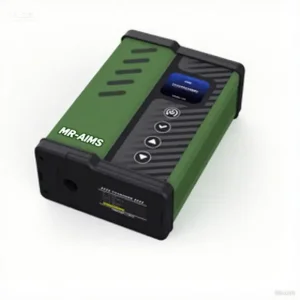
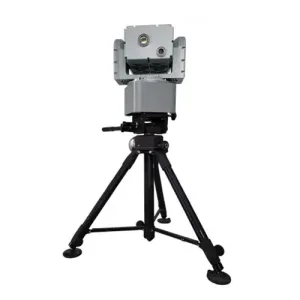
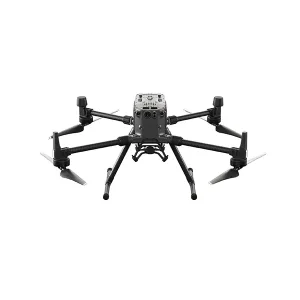
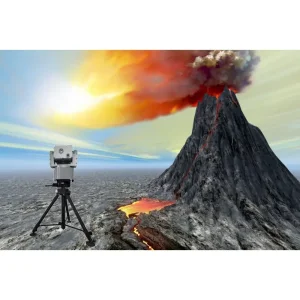
In the modern industrial era, Phosgene (COCl2) remains one of the most critical yet hazardous chemicals used in the production of plastics, pesticides, and pharmaceuticals. Due to its high toxicity and colorless nature, the UAV Phosgene Detector has become an indispensable tool for environmental protection agencies and industrial safety teams worldwide. The integration of Unmanned Aerial Vehicles (UAVs) with high-precision sensors allows for 3D spatial mapping of gas plumes without risking human lives.
The global environmental monitoring market is projected to reach $20 billion by 2028, with UAV-based chemical sensing being the fastest-growing segment at a CAGR of 12.5%.
Stringent regulations from the EPA (USA), REACH (Europe), and MEP (China) are forcing industrial parks to adopt real-time, mobile air quality monitoring solutions.
Transitioning from traditional electrochemical sensors to Fourier Transform Infrared (FTIR) and Ion Mobility Spectrometry (IMS) for zero-false-alarm performance.
The global industrial demand for Phosgene detectors is shifting from "point-fixed" detection to "dynamic-grid" monitoring. In North America and Europe, the focus is on integrating UAV detectors into Smart City frameworks and emergency response protocols. Meanwhile, in the Asia-Pacific region, particularly in China and India, the massive expansion of petrochemical hubs has made the Environmental Protection Industry UAV Phosgene Detector Manufacturer ranking a critical guide for procurement officers.
The primary challenge in phosgene detection is its low odor threshold and delayed physiological effects. Advanced UAV platforms now carry multi-spectral payloads that can identify phosgene at parts-per-billion (ppb) levels from a distance of several kilometers. This "Early Warning" capability is the benchmark for the top-ranking manufacturers in 2024.
Monitoring reactor leakage and storage tank integrity in high-density industrial zones where manual inspection is high-risk.
Rapid deployment during industrial accidents to define "Hot Zones" and "Safe Zones" for first responders and nearby residents.
Scanning chemical containers at international ports to ensure no hazardous leaks during customs clearance and storage.
As a leading Chinese factory established in 2012, we provide a unique blend of high-speed R&D and cost-efficient production. Our advantages include:
Founded in 2012, our group company has spent over a decade at the forefront of chemical sensing technology. We are not just manufacturers; we are innovators holding numerous intellectual property rights in Fourier Transform Infrared (FTIR) and IMS (Ion Mobility Spectrometry) technologies.
The next generation of UAV Phosgene Detectors will be defined by "Swarm Intelligence." Instead of a single drone, a fleet of UAVs will communicate in real-time to triangulate the source of a leak within seconds. Furthermore, the integration of AI-driven predictive modeling allows industrial managers to foresee where a toxic cloud might travel based on wind patterns and topography.
Our commitment to Fourier infrared gas remote sensing allows for the identification of dozens of gases simultaneously. Unlike electrochemical sensors that can be "poisoned" by high concentrations, infrared sensing remains stable and accurate in the most extreme environments. This is why our systems are ranked top for military and petroleum industry applications.
 Airppb